
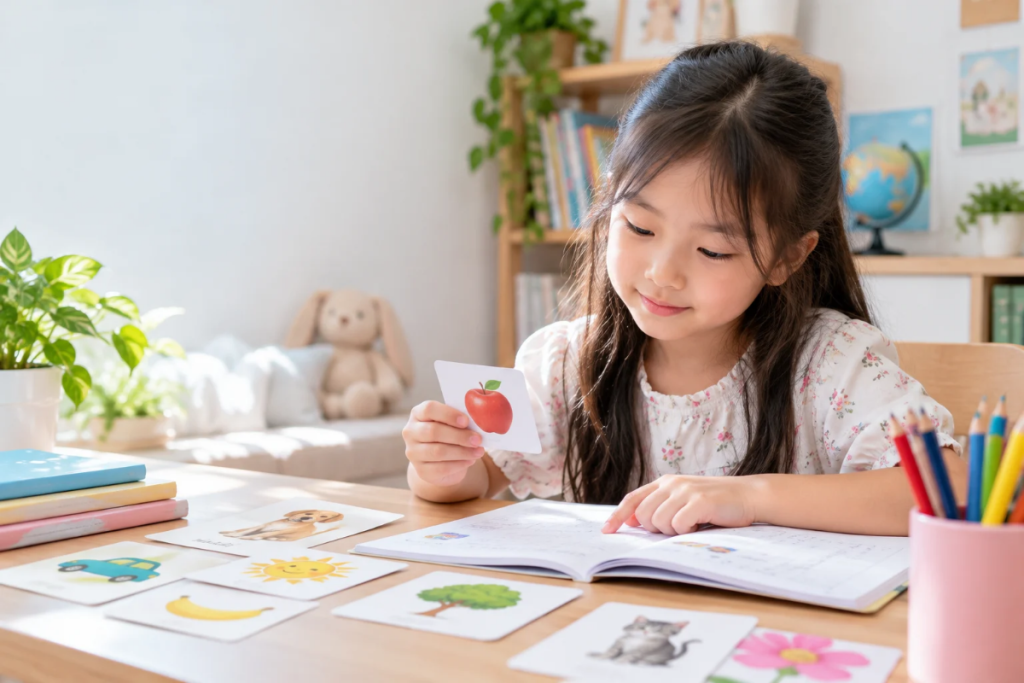
Primary School English Vocabulary provides an important foundation for children as they begin learning English. A strong vocabulary helps young learners develop their listening, speaking, reading, and writing skills. It also enables them to understand classroom instructions, express their needs, and take part in simple everyday conversations.
Instead of memorizing isolated words, children can learn new vocabulary through familiar topics such as family, school, colors, animals, and food. This approach helps them connect English words with real-life objects and situations, making new vocabulary easier to understand, remember, and use.
This guide brings together essential English vocabulary for Grades 1–5, including IPA pronunciation, English definitions, example sentences, and practical learning strategies for primary school students.
Essential Primary School English Vocabulary by Topic
The following vocabulary lists cover common words that children can use in everyday communication and school activities. Parents and teachers can select the topics that best match each child’s age and English proficiency.
Family Vocabulary for Primary School Students
Family is a familiar topic that helps children learn how to identify relatives and introduce family members.
| English Word | IPA Pronunciation | Meaning |
| Family | /ˈfæməli/ | A group of people related to one another |
| Father | /ˈfɑːðə(r)/ | A male parent |
| Mother | /ˈmʌðə(r)/ | A female parent |
| Brother | /ˈbrʌðə(r)/ | A male sibling |
| Sister | /ˈsɪstə(r)/ | A female sibling |
| Grandfather | /ˈɡrænfɑːðə(r)/ | The father of a parent |
| Grandmother | /ˈɡrænmʌðə(r)/ | The mother of a parent |
| Parents | /ˈpeərənts/ | A person’s mother and father |
Example sentences:
- This is my mother.
- I love my family.
Children can practice by looking at family photos and introducing each person with simple sentences such as This is my father or She is my sister.
School Vocabulary for Primary School Students
School vocabulary helps children identify classroom objects, school staff, and familiar learning environments.
| English Word | IPA Pronunciation | Meaning |
| School | /skuːl/ | A place where students learn |
| Classroom | /ˈklɑːsruːm/ | A room where lessons take place |
| Teacher | /ˈtiːtʃə(r)/ | A person who teaches |
| Student | /ˈstjuːdnt/ | A person who studies |
| Book | /bʊk/ | A set of written or printed pages |
| Notebook | /ˈnəʊtbʊk/ | A book used for writing notes |
| Pencil | /ˈpensl/ | A tool used for writing or drawing |
| Ruler | /ˈruːlə(r)/ | A tool used to measure or draw straight lines |
| Eraser | /ɪˈreɪzə(r)/ | An object used to remove pencil marks |
| School bag | /ˈskuːl bæɡ/ | A bag used to carry school supplies |
Example sentences:
- This is my school bag.
- My teacher is nice.
Parents can ask children to name objects in their school bags or point to items in the classroom to practice these words.
Numbers Vocabulary for Primary School Students
Numbers are essential for counting objects, talking about age, and answering questions about quantity.
| English Word | IPA Pronunciation | Meaning |
| One | /wʌn/ | The number 1 |
| Two | /tuː/ | The number 2 |
| Three | /θriː/ | The number 3 |
| Four | /fɔː(r)/ | The number 4 |
| Five | /faɪv/ | The number 5 |
| Six | /sɪks/ | The number 6 |
| Seven | /ˈsevn/ | The number 7 |
| Eight | /eɪt/ | The number 8 |
| Nine | /naɪn/ | The number 9 |
| Ten | /ten/ | The number 10 |
| Eleven | /ɪˈlevn/ | The number 11 |
| Twelve | /twelv/ | The number 12 |
| Thirteen | /ˌθɜːˈtiːn/ | The number 13 |
| Fourteen | /ˌfɔːˈtiːn/ | The number 14 |
| Fifteen | /ˌfɪfˈtiːn/ | The number 15 |
| Sixteen | /ˌsɪksˈtiːn/ | The number 16 |
| Seventeen | /ˌsevnˈtiːn/ | The number 17 |
| Eighteen | /ˌeɪˈtiːn/ | The number 18 |
| Nineteen | /ˌnaɪnˈtiːn/ | The number 19 |
| Twenty | /ˈtwenti/ | The number 20 |
| Thirty | /ˈθɜːti/ | The number 30 |
| Forty | /ˈfɔːti/ | The number 40 |
| Fifty | /ˈfɪfti/ | The number 50 |
| Sixty | /ˈsɪksti/ | The number 60 |
| Seventy | /ˈsevnti/ | The number 70 |
| Eighty | /ˈeɪti/ | The number 80 |
| Ninety | /ˈnaɪnti/ | The number 90 |
| One hundred | /wʌn ˈhʌndrəd/ | The number 100 |
Example sentences:
- I am eight years old.
- I have three books.
Counting pencils, toys, or other household objects is a simple way to help children practice numbers in context.
Colors Vocabulary for Primary School Students
Children can learn colors by observing everyday objects, clothing, pictures, and their surroundings.
| English Word | IPA Pronunciation | Meaning |
| Red | /red/ | The color of a ripe strawberry |
| Blue | /bluː/ | The color often seen in a clear sky |
| Yellow | /ˈjeləʊ/ | The color of a lemon |
| Green | /ɡriːn/ | The color of fresh grass |
| Orange | /ˈɒrɪndʒ/ | A color between red and yellow |
| Pink | /pɪŋk/ | A light red color |
| Purple | /ˈpɜːpl/ | A color combining red and blue |
| Brown | /braʊn/ | The color of soil or wood |
| Black | /blæk/ | The darkest color |
| White | /waɪt/ | The color of fresh snow |
| Grey | /ɡreɪ/ | A color between black and white |
| Gold | /ɡəʊld/ | A yellowish metallic color |
| Silver | /ˈsɪlvə(r)/ | A shiny grey metallic color |
| Light blue | /ˌlaɪt ˈbluː/ | A pale shade of blue |
| Dark blue | /ˌdɑːk ˈbluː/ | A deep shade of blue |
Example sentences:
- The sky is blue.
- My bag is pink.
A color hunt can make practice more interactive. Ask children to find an object of a particular color and describe it in English.
Animals Vocabulary for Primary School Students
Animals are an engaging topic because children can learn their names through pictures, sounds, stories, and guessing games.
| English Word | IPA Pronunciation | Meaning |
| Animal | /ˈænɪml/ | A living creature |
| Cat | /kæt/ | A small domesticated animal that often has fur and whiskers |
| Dog | /dɒɡ/ | A domesticated animal often kept as a pet |
| Rabbit | /ˈræbɪt/ | A small mammal with long ears |
| Fish | /fɪʃ/ | An animal that lives in water |
| Bird | /bɜːd/ | An animal with feathers and wings |
| Hamster | /ˈhæmstə(r)/ | A small rodent sometimes kept as a pet |
| Cow | /kaʊ/ | A farm animal that produces milk |
| Pig | /pɪɡ/ | A farm animal with a short snout |
| Chicken | /ˈtʃɪkɪn/ | A common farm bird |
| Duck | /dʌk/ | A water bird with a broad bill |
| Horse | /hɔːs/ | A large animal that can be ridden |
| Sheep | /ʃiːp/ | A farm animal that produces wool |
| Goat | /ɡəʊt/ | A farm animal with horns |
| Tiger | /ˈtaɪɡə(r)/ | A large wild cat with dark stripes |
| Lion | /ˈlaɪən/ | A large wild cat |
| Elephant | /ˈelɪfənt/ | A very large mammal with a trunk |
| Monkey | /ˈmʌŋki/ | A primate that often climbs trees |
| Giraffe | /dʒəˈrɑːf/ | A tall animal with a long neck |
| Bear | /beə(r)/ | A large, strong mammal |
Example sentences:
- I have a cat.
- The elephant is big.
Children can imitate animal sounds, match pictures with words, or describe animals using simple adjectives such as big, small, and fast.
Body Parts Vocabulary for Primary School Students
Body parts are useful for describing people and following simple instructions in English lessons.
| English Word | IPA Pronunciation | Meaning |
| Body | /ˈbɒdi/ | The physical structure of a person or animal |
| Head | /hed/ | The part containing the brain, eyes, ears, nose, and mouth |
| Face | /feɪs/ | The front part of the head |
| Hair | /heə(r)/ | The strands that grow on the head |
| Eye | /aɪ/ | An organ used for seeing |
| Ear | /ɪə(r)/ | An organ used for hearing |
| Nose | /nəʊz/ | The part used for smelling and breathing |
| Mouth | /maʊθ/ | The opening used for eating and speaking |
| Tooth | /tuːθ/ | One of the hard structures in the mouth |
| Neck | /nek/ | The part connecting the head to the body |
| Shoulder | /ˈʃəʊldə(r)/ | The part connecting the arm to the body |
| Arm | /ɑːm/ | The upper limb |
| Hand | /hænd/ | The part at the end of the arm |
| Finger | /ˈfɪŋɡə(r)/ | One of the digits on a hand |
| Leg | /leɡ/ | A limb used for standing and walking |
| Knee | /niː/ | The joint in the middle of the leg |
| Foot | /fʊt/ | The part at the end of the leg |
| Toe | /təʊ/ | One of the digits on a foot |
Example sentences:
- Touch your nose.
- I have two eyes.
Action-based activities can help children connect vocabulary with movement and improve recall.
Food and Drinks Vocabulary for Primary School Students
Food and drinks are everyday topics that help children talk about meals, preferences, and familiar ingredients.
| English Word | IPA Pronunciation | Meaning |
| Food | /fuːd/ | Things people eat |
| Drink | /drɪŋk/ | A liquid that people consume |
| Rice | /raɪs/ | A grain commonly eaten as food |
| Bread | /bred/ | A food made from flour and baked |
| Noodles | /ˈnuːdlz/ | Long, thin strips of dough |
| Chicken | /ˈtʃɪkɪn/ | Meat from a chicken |
| Beef | /biːf/ | Meat from a cow |
| Fish | /fɪʃ/ | An aquatic animal or its meat |
| Egg | /eɡ/ | An oval object laid by a bird, often eaten as food |
| Apple | /ˈæpl/ | A round fruit |
| Banana | /bəˈnɑːnə/ | A long, curved fruit |
| Orange | /ˈɒrɪndʒ/ | A round citrus fruit |
| Mango | /ˈmæŋɡəʊ/ | A sweet tropical fruit |
| Watermelon | /ˈwɔːtəmelən/ | A large fruit with juicy flesh |
| Cake | /keɪk/ | A sweet baked food |
| Ice cream | /ˈaɪs kriːm/ | A frozen sweet dessert |
| Milk | /mɪlk/ | A white liquid produced by mammals |
| Water | /ˈwɔːtə(r)/ | A clear liquid essential for life |
| Juice | /dʒuːs/ | A drink made from fruit or vegetables |
| Lemonade | /ˌleməˈneɪd/ | A drink commonly made with lemon, water, and sugar |
Example sentences:
- I like bananas.
- I drink milk every day.
Parents can ask children to name the foods on their plates or describe what they like to eat and drink.
House Vocabulary for Primary School Students
House vocabulary helps children identify rooms, furniture, and everyday objects at home.
| English Word | IPA Pronunciation | Meaning |
| House | /haʊs/ | A building where people live |
| Home | /həʊm/ | The place where someone lives |
| Living room | /ˈlɪvɪŋ ruːm/ | A room for relaxing and spending time together |
| Bedroom | /ˈbedruːm/ | A room where people sleep |
| Bathroom | /ˈbɑːθruːm/ | A room containing a bath or shower |
| Kitchen | /ˈkɪtʃɪn/ | A room where food is prepared |
| Dining room | /ˈdaɪnɪŋ ruːm/ | A room where people eat meals |
| Garden | /ˈɡɑːdn/ | An area where plants and flowers grow |
| Door | /dɔː(r)/ | A movable barrier used to enter or leave a room |
| Window | /ˈwɪndəʊ/ | An opening fitted with glass to let in light |
| Table | /ˈteɪbl/ | A piece of furniture with a flat top |
| Chair | /tʃeə(r)/ | A seat for one person |
| Bed | /bed/ | Furniture used for sleeping |
| Sofa | /ˈsəʊfə/ | A long, comfortable seat |
| Lamp | /læmp/ | A device that produces light |
| Television | /ˈtelɪvɪʒn/ | An electronic device used to watch programs |
| Wardrobe | /ˈwɔːdrəʊb/ | A piece of furniture used to store clothes |
| Fridge | /frɪdʒ/ | An appliance used to keep food cold |
Example sentences:
- My bedroom is small.
- The book is on the table.
More Primary School English Vocabulary Topics to Explore
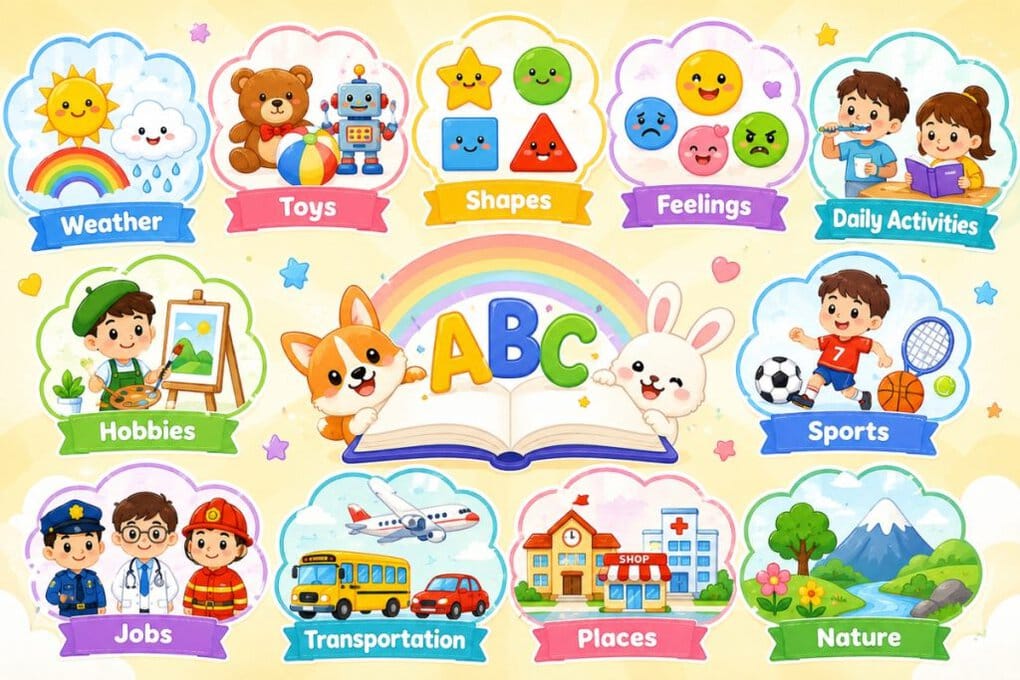
After learning the basic groups, children can expand their vocabulary through other familiar topics. These themes also provide opportunities to practice simple sentences and everyday conversations.
| Topic | Vocabulary Focus |
| Greetings and Introductions | Greetings, names, and personal information |
| Days, Months, and Time | Days of the week, months, and telling the time |
| Toys | Common toys and playthings |
| Shapes | Circles, squares, triangles, and other shapes |
| Weather | Sunny, rainy, windy, and cloudy conditions |
| Seasons | Spring, summer, autumn, and winter |
| Feelings and Emotions | Happy, sad, angry, and tired |
| Daily Activities | Waking up, eating breakfast, and going to school |
| Hobbies | Reading, drawing, and listening to music |
| Sports | Football, swimming, and badminton |
| Jobs | Teacher, doctor, and chef |
| Transportation | Bicycle, bus, car, and train |
| Places | Park, hospital, and supermarket |
| Nature | Trees, flowers, rivers, and mountains |
Parents can select topics according to the child’s age and current level. Beginners may start with colors, numbers, family, and classroom objects before moving on to hobbies, jobs, and daily activities.
How to Learn Primary School English Vocabulary Effectively
Learning vocabulary involves more than memorizing word meanings. Children need opportunities to recognize, pronounce, recall, and use new words in different contexts.
Group Vocabulary by Topic
Related words are often easier to remember when learned together. For example, children studying the topic Fruits can begin with:
Apple – banana – orange – mango – watermelon.
They can then use these words in simple sentences:
- I like apples.
- This is a mango.
- The watermelon is big.
This method helps children connect vocabulary with a meaningful context rather than learning each word in isolation.
Use Pictures and Audio
Pictures help children associate English words with real objects. When learning elephant, for example, a child can look at a picture, listen to the pronunciation, repeat the word, and use it in a sentence: This is an elephant.
A simple learning sequence is:
Look at the picture → Listen to the word → Repeat it → Understand its meaning → Use it in a sentence.
Practice With Flashcards
Flashcards are useful for short learning and review sessions. Each card can include:
- A picture.
- The English word.
- IPA pronunciation.
- The meaning.
- A short example sentence.
Parents can ask children to guess the word from the picture, select the correct picture after hearing a word, or make a sentence using the vocabulary.
Learn Through Songs, Videos, and Games
Songs about the alphabet, numbers, colors, animals, and body parts expose children to repeated vocabulary and natural pronunciation patterns.
After listening or watching, parents can ask simple questions such as:
- What animals did you see?
- What color is the cat?
- Can you name three new words?
Other useful activities include matching words with pictures, playing Bingo, guessing words from clues, finding matching cards, following Simon Says instructions, and completing word searches.
Learn Words in Phrases and Sentences
Instead of memorizing apple as a single word, children can gradually expand their understanding:
Apple → an apple → a red apple → I have a red apple.
Another example is:
Swim → can swim → I can swim.
Learning words in phrases and sentences helps children understand how vocabulary works in context and prepares them to use it in speaking and writing.
Review Vocabulary With Spaced Repetition
Spaced repetition involves reviewing previously learned information at intervals. This approach gives children repeated opportunities to recall vocabulary instead of studying everything only once.
A sample review schedule is shown below.
| Time | Activity |
| Day 1 | Learn new words |
| Day 2 | First review |
| Day 4 | Second review |
| Day 7 | Third review |
| Day 14 | Check recall again |
This is a suggested schedule rather than a strict rule. Words that children struggle to remember can be reviewed more frequently.
Effective Teaching Methods for Primary School English Vocabulary
Parents and teachers can combine several approaches to match children’s learning preferences and keep lessons engaging.

Visual Learning
Use pictures, flashcards, videos, and real objects to illustrate meanings. For example, a teacher can hold up a pencil when introducing the word pencil, allowing children to see the object, hear the word, and repeat it.
Total Physical Response (TPR)
Total Physical Response connects language with physical actions. Children listen to instructions and respond through movement, such as Stand up, Sit down, Touch your nose, or Jump.
This method is especially useful for action words, body parts, and classroom instructions.
Game-Based Learning
Vocabulary games give children opportunities to repeat words in an enjoyable setting. Activities can include word guessing, picture matching, Bingo, and memory games.
Teachers should choose games with clear learning goals so that children practice the vocabulary they need to remember.
Storytelling
Short stories help children understand words through context. Instead of presenting each word separately, a teacher can introduce cat, house, milk, and happy in a story about a cat at home.
This allows children to connect words and understand how they are used together.
Songs and Chants
Songs and rhythmic chants can introduce vocabulary related to numbers, colors, days of the week, and body parts. Repetition and rhythm give children more opportunities to hear and practice pronunciation.
A vocabulary lesson can follow this sequence:
Introduce the word → Listen and repeat → Recognize the word → Use it in a sentence → Review.
This process helps children understand meanings, practice pronunciation, and apply new vocabulary in simple situations.
Building a Strong Primary School English Vocabulary Habit
Learning Primary School English Vocabulary becomes more effective when children study regularly, practice in different contexts, and review what they have learned. Parents do not need to focus on the number of new words children memorize each day. Understanding meanings, developing clear pronunciation, and using words in appropriate sentences are equally important.
Start with a familiar topic, choose a manageable group of words, and combine pictures, games, and short conversations. As children become more confident, introduce new topics and connect previously learned words with new vocabulary. Over time, this routine can help them build a solid vocabulary foundation for future English learning.
Frequently Asked Questions About Primary School English Vocabulary
How many English words should primary school students learn each day?
There is no single number that works for every child. Around five to ten new words per session can be a starting point for beginners, but parents should adjust the amount according to age, attention span, and recall. If children have difficulty remembering earlier vocabulary, spend more time reviewing before adding new words.
How can children remember English vocabulary for longer?
Children should encounter words in several ways, including looking at pictures, listening to pronunciation, repeating words, choosing the correct pictures, making sentences, and reviewing after a few days.
For example, when learning banana, a child can look at a picture, listen to and repeat the word, say I like bananas, and review it again later.
Should primary school students learn IPA pronunciation?
Children can gradually become familiar with age-appropriate pronunciation symbols, but they do not need to memorize the entire IPA chart at the beginning. Listening to clear pronunciation models and practicing basic sounds should come first. As their reading skills improve, IPA can help them use dictionaries and work on pronunciation more independently.
Where can parents find Primary School English Vocabulary PDF resources?
Parents can explore school textbooks, accompanying learning materials, and educational websites suitable for their children’s ages. Choose resources with clearly organized topics, accurate meanings, pronunciation guidance, and exercises that allow children to practice using new words.
Keywords:
- Primary School English Vocabulary PDF
- English Vocabulary for Grades 1–5
- Basic English Vocabulary for Kids
- Primary School English Vocabulary Exercises
- English Vocabulary Worksheets for Kids
