
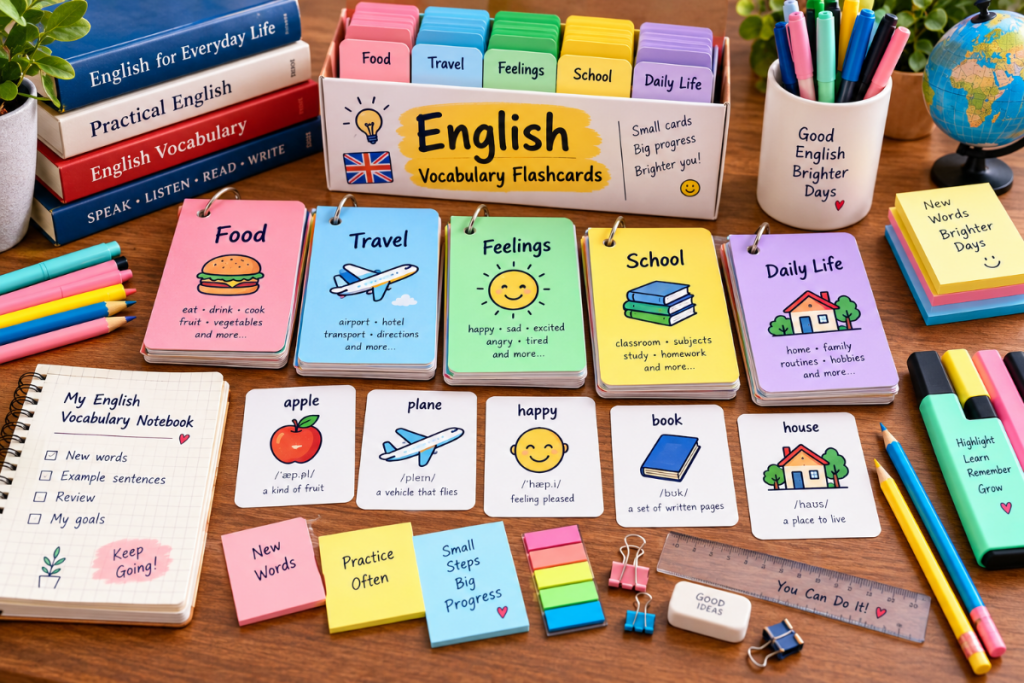
Vocabulary is an essential part of IELTS preparation. Whether you are taking the Listening, Reading, Writing, or Speaking test, your ability to understand and use words accurately can influence how effectively you communicate in English.
However, memorizing isolated words is not always the most effective approach. Learning IELTS vocabulary by topic helps you organize new words into meaningful groups, understand how they are used in context, and apply them more confidently in different types of IELTS tasks.
From education and the environment to technology, health, and careers, many IELTS topics require you to discuss familiar issues, explain your opinions, and support your ideas with relevant examples.
This guide introduces essential IELTS vocabulary by topic, complete with definitions, example sentences, and practical study strategies to help you build a stronger vocabulary and use it more effectively.
Why Learn IELTS Vocabulary by Topic?
IELTS assesses your ability to understand and communicate ideas in different contexts. Knowing the definition of a word is useful, but you also need to understand its common combinations, grammatical forms, and appropriate usage.
Learning vocabulary by topic offers several benefits.
- Organize your knowledge: Grouping related words makes vocabulary easier to review and remember.
- Develop ideas more effectively: Topic-specific vocabulary gives you more language resources for explaining opinions and supporting arguments in Speaking and Writing.
- Improve reading and listening comprehension: Familiarity with common terms can help you recognize information and infer meaning from context.
- Use natural expressions: Learning collocations and word families helps you avoid awkward word combinations and grammatical mistakes.
- Make revision more efficient: You can prioritize topics that match your current English level and IELTS goals.
Rather than trying to memorize hundreds of words at once, start with frequently useful vocabulary and gradually expand your knowledge through regular practice.

Essential IELTS Vocabulary by Topic
The following IELTS vocabulary by topic lists cover several common areas of discussion. Each section includes useful words, Vietnamese meanings for reference, and example sentences to demonstrate how the vocabulary works in context.
Education: IELTS Vocabulary by Topic
Education is a useful topic for IELTS Speaking and Writing Task 2. Questions may focus on school systems, teaching methods, university education, tuition fees, and equal access to learning opportunities.
| Vocabulary | Vietnamese Meaning |
| Curriculum | Chương trình học |
| Syllabus | Đề cương môn học |
| Assignment | Bài tập được giao |
| Assessment | Sự đánh giá |
| Scholarship | Học bổng |
| Undergraduate | Sinh viên bậc đại học |
| Postgraduate | Sau đại học |
| Tuition fee | Học phí |
| Vocational education | Giáo dục nghề nghiệp |
| Lifelong learning | Học tập suốt đời |
Example sentences:
- Many universities offer scholarships to international students.
- Lifelong learning enables people to adapt to changes in the workplace.
You can also learn useful collocations such as access to education, academic performance, and practical skills. These expressions help you discuss educational opportunities, student achievement, and the importance of developing skills beyond academic knowledge.
Environment: IELTS Vocabulary by Topic
Environmental issues frequently involve climate change, pollution, wildlife conservation, and sustainable development. Learning relevant vocabulary can help you explain environmental problems and suggest possible solutions.
| Vocabulary | Vietnamese Meaning |
| Biodiversity | Đa dạng sinh học |
| Climate change | Biến đổi khí hậu |
| Renewable energy | Năng lượng tái tạo |
| Greenhouse gases | Khí nhà kính |
| Carbon emissions | Lượng khí thải carbon |
| Conservation | Sự bảo tồn |
| Pollution | Ô nhiễm |
| Ecosystem | Hệ sinh thái |
| Deforestation | Nạn phá rừng |
| Sustainable development | Phát triển bền vững |
Example sentences:
- Renewable energy can help reduce carbon emissions.
- Deforestation poses a serious threat to biodiversity.
To expand your IELTS vocabulary by topic, learn expressions such as protect the environment, reduce air pollution, and adopt sustainable practices. These phrases can help you explain environmental challenges and discuss practical ways to address them.
Technology: IELTS Vocabulary by Topic
Technology is another useful area for IELTS preparation. Questions may explore artificial intelligence, digital communication, online privacy, automation, and the influence of technology on modern life.
| Vocabulary | Vietnamese Meaning |
| Artificial intelligence | Trí tuệ nhân tạo |
| Automation | Sự tự động hóa |
| Cybersecurity | An ninh mạng |
| Innovation | Sự đổi mới |
| Digital literacy | Năng lực số |
| Online platform | Nền tảng trực tuyến |
| Data privacy | Quyền riêng tư dữ liệu |
| Remote working | Làm việc từ xa |
| Smartphone addiction | Tình trạng nghiện điện thoại |
| Technological advancement | Sự tiến bộ công nghệ |
Example sentences:
- Artificial intelligence is transforming the way people work.
- Data privacy has become a major concern in the digital age.
Other useful expressions include improve efficiency, access information instantly, and rely heavily on technology. Practicing these collocations can help you discuss both the benefits and potential disadvantages of technological development.
Health: IELTS Vocabulary by Topic
Health-related questions often involve personal habits, public healthcare, physical activity, nutrition, and mental well-being. This topic is particularly useful when discussing the causes of health problems and possible preventive measures.
| Vocabulary | Vietnamese Meaning |
| Balanced diet | Chế độ ăn cân bằng |
| Obesity | Béo phì |
| Sedentary lifestyle | Lối sống ít vận động |
| Mental health | Sức khỏe tinh thần |
| Healthcare system | Hệ thống chăm sóc sức khỏe |
| Chronic disease | Bệnh mạn tính |
| Vaccination | Việc tiêm chủng |
| Nutritious | Bổ dưỡng |
| Physical activity | Hoạt động thể chất |
| Well-being | Trạng thái khỏe mạnh toàn diện |
Example sentences:
- Regular physical activity can improve mental health.
- A balanced diet helps reduce the risk of certain chronic diseases.
To develop your answers, practice expressions such as maintain a healthy lifestyle, prevent health problems, and improve public health. These phrases are useful for explaining how individuals and governments can contribute to better health outcomes.
Work and Career: IELTS Vocabulary by Topic
Work and career vocabulary is useful for discussing employment opportunities, professional development, workplace conditions, and job satisfaction.
| Vocabulary | Vietnamese Meaning |
| Employment | Việc làm |
| Unemployment | Tình trạng thất nghiệp |
| Promotion | Sự thăng chức |
| Salary | Tiền lương |
| Job satisfaction | Sự hài lòng trong công việc |
| Flexible working | Hình thức làm việc linh hoạt |
| Workload | Khối lượng công việc |
| Productivity | Năng suất |
| Qualification | Bằng cấp hoặc trình độ chuyên môn |
| Professional development | Phát triển nghề nghiệp |
Example sentences:
- Flexible working arrangements can improve job satisfaction.
- Professional development helps employees improve their skills.
You should also practice collocations such as career opportunities, work-life balance, and meet deadlines. These expressions can help you explain what makes a job rewarding, how working conditions affect employees, and why professional skills matter.
Society: IELTS Vocabulary by Topic
Society-related topics may cover urban development, population changes, cultural differences, public services, and living standards. These subjects often require you to analyze problems and explain their wider effects on communities.
| Vocabulary | Vietnamese Meaning |
| Inequality | Sự bất bình đẳng |
| Population growth | Gia tăng dân số |
| Urbanisation | Đô thị hóa |
| Cultural diversity | Sự đa dạng văn hóa |
| Public transport | Giao thông công cộng |
| Social welfare | Phúc lợi xã hội |
| Community | Cộng đồng |
| Migration | Sự di cư |
| Crime rate | Tỷ lệ tội phạm |
| Quality of life | Chất lượng cuộc sống |
Example sentences:
- Investment in public transport can improve the quality of life in cities.
- Rapid urbanisation can put pressure on public services.
Useful expressions include bridge the gap between rich and poor, address social issues, and improve living standards. Learning these phrases can help you develop clearer arguments about social challenges and potential solutions.
How to Learn IELTS Vocabulary by Topic Effectively
Collecting vocabulary lists is only the first step. To use new words confidently, you need a consistent learning routine that combines understanding, active recall, and practical application.
Learn Collocations Instead of Isolated Words
Collocations are combinations of words that commonly occur together in natural English. Learning them can help you produce more accurate and fluent sentences.
For example, instead of memorizing the word threat on its own, learn the following expressions:
- Pose a serious threat
- Play a vital role
- Make significant progress
- Raise public awareness
- Tackle a problem
After learning each expression, write your own sentence and identify the topics where it might be useful.
For example:
Renewable energy plays a vital role in reducing carbon emissions.
This approach helps you remember not only the meaning of a word but also how to use it naturally.
Expand Your Vocabulary Through Word Families
A word family consists of related words that have different grammatical forms or uses. Learning word families helps you select the correct part of speech when writing or speaking.
| Part of Speech | Example |
| Verb | Educate |
| Noun | Education, educator |
| Adjective | Educational, educated |
| Adverb | Educationally |
For example:
- Education plays an important role in personal development.
- Schools should provide students with educational resources.
When learning a new word, record its common forms and practice using them in different sentences. Remember that related words are not always interchangeable, so pay attention to their grammatical patterns and meanings.
Create Your Own Example Sentences
Reading definitions repeatedly does not necessarily mean you can use a word confidently. Active practice helps you move from recognizing vocabulary to producing it independently.
After studying the Environment topic, for example, you could write:
- Governments should invest more in renewable energy.
- Plastic pollution has a negative impact on marine life.
- Individuals can contribute to environmental protection by reducing waste.
Start with clear, grammatically accurate sentences before attempting more complex structures. You can also record yourself speaking to review your pronunciation, fluency, and use of newly learned expressions.
Use Spaced Repetition to Remember New Words
Spaced repetition is a learning technique that involves reviewing information at planned intervals. It can help reinforce vocabulary and reduce the likelihood of forgetting words after a single study session.
A sample revision schedule might look like this:
| Review Time | Suggested Activity |
| Day 1 | Learn the word, definition, and example |
| Day 2 | Test your recall without looking at the list |
| Day 4 | Write new sentences using the vocabulary |
| Day 8 | Write a short paragraph on the topic |
| Day 15 | Practice a related Speaking question |
| Day 30 | Review difficult words and common mistakes |
Adjust this schedule according to your progress. Words that are difficult to remember or frequently used incorrectly may require more frequent review.
Practice Vocabulary Across All Four IELTS Skills
To make your vocabulary more flexible, apply it to different IELTS tasks rather than relying exclusively on word lists.
- Listening: Pay attention to pronunciation, word stress, and synonyms that may appear in questions and recordings.
- Reading: Record unfamiliar words in context, identify their parts of speech, and try to infer their meanings before consulting a dictionary.
- Writing: Choose vocabulary that matches your argument, use collocations accurately, and avoid unnecessary repetition.
- Speaking: Practice answering topic-based questions and use new expressions naturally instead of forcing difficult words into every sentence.
You do not need complex vocabulary in every sentence. Accuracy, relevance, and clear communication are more important than using unfamiliar words simply to sound advanced.

Should You Download IELTS Vocabulary by Topic PDF Resources?
PDF resources can be convenient for learners who prefer offline study, printed vocabulary lists, or written notes. However, the quality of the material and the way you use it matter more than the number of words it contains.
Before downloading IELTS vocabulary by topic PDF resources, consider the following factors.
- Clear topic organization: The material should group vocabulary into relevant categories, such as Education, Environment, Health, and Technology.
- Useful example sentences: Definitions should be accompanied by examples that demonstrate how each word is used.
- Collocations and word families: These features help you expand your vocabulary and understand grammatical usage.
- Appropriate difficulty: Beginners should focus on common vocabulary before progressing to more advanced expressions.
- Easy revision: Clear tables, note-taking space, and practice questions can make the material more useful for long-term learning.
If you search for resources such as 5,000 IELTS vocabulary words PDF or 6,000 IELTS vocabulary words PDF, do not evaluate them solely by the number of entries. A smaller, well-organized resource with accurate examples and practical exercises may be more useful than a long list without guidance.
Common Mistakes When Learning IELTS Vocabulary by Topic
Even with good learning materials, you may struggle to use vocabulary effectively if you develop unhelpful study habits.
Learning only Vietnamese meanings
Knowing a word’s meaning does not guarantee correct usage. For example, English speakers say do homework, not make homework. Learn common word combinations and examine how expressions appear in sentences.
Prioritizing rare words over useful vocabulary
Advanced words do not automatically improve your answers. Focus on expressions that match the topic and that you can use accurately and naturally.
Memorizing too many words at once
Learning a large number of words without sufficient revision can make retention difficult. Set a manageable daily target and review previous vocabulary regularly.
Skipping practical exercises
Reading a list without writing sentences, producing paragraphs, or practicing speaking may leave you unprepared to use the words during the test.
Using vocabulary in the wrong context
Words can differ in meaning, tone, and grammatical patterns. Check reliable examples before applying unfamiliar expressions to your essays or spoken answers.
Building a strong vocabulary takes time. Combine new learning with regular revision, practical exercises, and reflection on your mistakes to make steady progress.
Frequently Asked Questions About IELTS Vocabulary by Topic
How Many IELTS Vocabulary Words Should I Learn Each Day?
Learning around 10–15 new words per day can be a reasonable starting point for many learners. Focus on remembering their meanings, pronunciation, and usage rather than simply increasing the number of words you study.
Can IELTS Vocabulary by Topic Improve All Four Skills?
Yes. Topic-based vocabulary can help you recognize information in Listening and Reading while giving you more language resources for expressing ideas in Speaking and Writing.
Which IELTS Vocabulary Topics Should Beginners Study First?
Beginners can start with Education, Health, Environment, and Work and Career. These topics provide useful vocabulary for practicing reading, listening, writing, and speaking.
Do I Need to Memorize Every IELTS Vocabulary List?
No. Prioritize vocabulary that matches your current level, learning needs, and target score. Once you can use common words confidently, expand your knowledge to more advanced expressions and collocations.
Is Quizlet Useful for Learning IELTS Vocabulary by Topic?
Quizlet can support vocabulary revision through flashcards and self-testing activities. For better results, combine digital flashcards with sentence writing, pronunciation practice, and real IELTS exercises.
Keywords:
- IELTS vocabulary by topic PDF
- 5,000 IELTS vocabulary words PDF
- 6,000 IELTS vocabulary words PDF
- IELTS vocabulary by topic for beginners
- IELTS vocabulary by topic Quizlet
