

Learning how to read numbers in English is an essential skill for everyday communication, shopping, studying, and working. Whether you need to say your age, discuss prices, give someone your phone number, or understand financial figures, knowing how to pronounce numbers correctly helps you communicate with greater confidence.
However, many English learners struggle with large numbers, the difference between fifteen and fifty, and the rules for reading hundreds, thousands, and millions. Understanding cardinal and ordinal numbers can also be challenging, especially when using them in dates and rankings.
This guide explains how to read numbers in English, from basic counting numbers to billions. You will learn pronunciation rules, practical examples, common mistakes, and exercises with answers to help you improve your English skills.
Basic Rules for How to Read Numbers in English
Before learning large numbers, it is important to understand the basic counting system. Once you become familiar with numbers from 1 to 100, you can apply the same principles to more complex numbers.
How to Read Numbers in English from 1 to 20
Numbers from 1 to 20 have individual names that learners should memorize. Pay attention to both spelling and pronunciation, as some words have irregular forms.
| Number | English | Number | English |
| 1 | One | 11 | Eleven |
| 2 | Two | 12 | Twelve |
| 3 | Three | 13 | Thirteen |
| 4 | Four | 14 | Fourteen |
| 5 | Five | 15 | Fifteen |
| 6 | Six | 16 | Sixteen |
| 7 | Seven | 17 | Seventeen |
| 8 | Eight | 18 | Eighteen |
| 9 | Nine | 19 | Nineteen |
| 10 | Ten | 20 | Twenty |
Some numbers, such as three, thirteen, fifteen, and eighteen, may be difficult to pronounce at first. Listen to reliable pronunciation recordings and repeat each word several times to improve your accuracy.
How to Read Numbers in English from 21 to 99
From 21 to 99, most numbers follow a simple pattern: combine the tens number with the units number. In written English, a hyphen is generally used between the two words.
Examples include:
- 21: twenty-one
- 34: thirty-four
- 46: forty-six
- 58: fifty-eight
- 73: seventy-three
- 99: ninety-nine
Pay attention to the spelling of tens numbers. For example, 40 is spelled forty, not fourty. Remembering these spelling differences can help you avoid common mistakes in writing and exams.
How to Read Numbers in English from 1 to 1,000
To read numbers up to 1,000, combine the basic counting rules with the structure for hundreds.
For example:
- 106: one hundred and six in common British English usage, or one hundred six in common American English usage.
- 275: two hundred and seventy-five.
- 408: four hundred and eight.
- 690: six hundred and ninety.
- 999: nine hundred and ninety-nine.
An effective strategy is to divide each number into smaller parts. Read the hundreds first, then pronounce the remaining tens and units. This approach makes long numbers easier to recognize and say correctly.
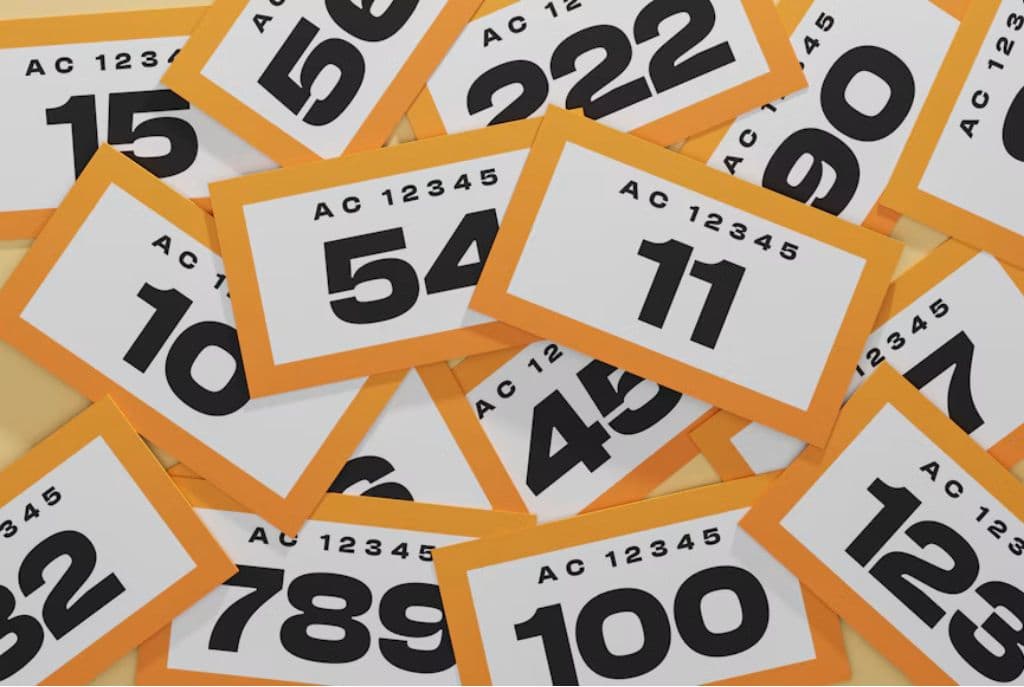
How to Read Numbers in English by Place Value
When dealing with numbers containing three or more digits, grouping digits into sets of three from right to left is particularly helpful. These groups correspond to thousands, millions, and billions.
How to Read Hundreds in English
For numbers from 100 to 999, the basic structure is:
Number of hundreds + hundred + remaining number.
In British English, and is commonly used before the remaining tens or units. In American English, it is often omitted when reading whole numbers.
| Number | English |
| 100 | One hundred |
| 120 | One hundred and twenty |
| 305 | Three hundred and five |
| 417 | Four hundred and seventeen |
| 860 | Eight hundred and sixty |
When the remaining digits are zero, there is no need to add another number. For example, 500 is simply five hundred, not five hundred and zero.
How to Read Thousands in English
Numbers from 1,000 onward follow the same principle: read the thousands first, then pronounce the remaining digits according to the rules for hundreds, tens, and units.
Examples:
- 1,000: one thousand
- 2,150: two thousand, one hundred and fifty
- 4,325: four thousand, three hundred and twenty-five
- 18,600: eighteen thousand, six hundred
- 75,999: seventy-five thousand, nine hundred and ninety-nine
In standard English number formatting, commas commonly separate groups of thousands. For example, 2,150 means two thousand one hundred and fifty, while a decimal point is generally used to separate the fractional part of a number.
For a number such as 10,005, you may hear ten thousand and five in British English or ten thousand five in some American English usage.
How to Read Hundreds of Thousands in English
Numbers from 100,000 to 999,999 may look complicated, but they become easier when divided into groups.
Examples:
- 100,000: one hundred thousand
- 250,000: two hundred and fifty thousand
- 450,300: four hundred and fifty thousand, three hundred
- 725,640: seven hundred and twenty-five thousand, six hundred and forty
Instead of reading each digit separately, identify the thousands group first. Then read the remaining hundreds, tens, and units.
This method helps you understand the structure of large numbers rather than memorizing individual examples.
How to Read Millions and Billions in English
The word million represents 1,000,000, while billion represents 1,000,000,000 in modern standard British and American English.
The same grouping principle applies:
- 1,000,000: one million
- 2,500,000: two million, five hundred thousand
- 3,200,400: three million, two hundred thousand, four hundred
- 15,000,000: fifteen million
- 1,000,000,000: one billion
- 2,450,000,000: two billion, four hundred and fifty million
Memory tip: Learn the sequence thousand, million, and billion first. Then practice reading each three-digit group from left to right. This is much more effective than trying to memorize long numbers individually.
How to Read Numbers in English: Cardinal and Ordinal Numbers
Cardinal and ordinal numbers serve different purposes. Cardinal numbers express quantities, while ordinal numbers indicate positions, rankings, or order.
How to Read Cardinal Numbers in English
Cardinal numbers are used to express quantities, ages, prices, and numerical values.
Examples:
- I have three notebooks.
- She is twenty years old.
- The ticket costs fifty dollars.
- There are twelve students in the room.
When learning cardinal numbers, focus on recognizing number patterns and pronouncing each word clearly.
How to Read Ordinal Numbers in English
Ordinal numbers are commonly used for rankings, dates, floors, and positions in a sequence.
| Number | Cardinal Number | Ordinal Number |
| 1 | One | First (1st) |
| 2 | Two | Second (2nd) |
| 3 | Three | Third (3rd) |
| 4 | Four | Fourth (4th) |
| 5 | Five | Fifth (5th) |
| 8 | Eight | Eighth (8th) |
| 9 | Nine | Ninth (9th) |
| 12 | Twelve | Twelfth (12th) |
| 20 | Twenty | Twentieth (20th) |
| 21 | Twenty-one | Twenty-first (21st) |
Most ordinal numbers are formed by adding -th to the cardinal number. However, several words have irregular forms, including first, second, third, fifth, eighth, ninth, and twelfth.
Numbers ending in 1, 2, and 3 generally use -st, -nd, and -rd, respectively. The exceptions are 11th, 12th, and 13th, which use -th.
For example, 21st is twenty-first, while 11th is eleventh.
How to Read Numbers in English in Everyday Situations
Knowing number pronunciation is more useful when you can apply it in real-life situations. Phone numbers, prices, dates, and years all have slightly different conventions.
How to Read Phone Numbers in English
Phone numbers are usually read digit by digit or in small groups to make them easier to understand. The digit 0 is commonly pronounced zero. In some contexts, particularly in British English, it may also be pronounced oh.
For example, 204-567 can be read as:
Two zero four, five six seven.
When giving a phone number, speak clearly and pause between groups. If you are communicating important contact information, repeat the number to confirm that the listener has understood it correctly.
How to Read Money and Prices in English
When discussing prices, combine the number with the appropriate currency unit.
Examples:
- $5: five dollars
- $12.50: twelve dollars and fifty cents
- £20: twenty pounds
- €35: thirty-five euros
In informal conversation, prices may be shortened. For instance, $12.50 can sometimes be read as twelve fifty. However, when accuracy matters, especially in financial transactions, make the currency and amount clear.
How to Read Dates and Years in English
Years have several common pronunciation patterns. For example, 1998 is often read as nineteen ninety-eight, while 2005 can be read as two thousand and five or two thousand five.
Dates are usually expressed with ordinal numbers when speaking about a specific day.
Examples:
- 1 January: the first of January
- March 5: March fifth
- 21 June: the twenty-first of June
British English commonly places the day before the month in written dates, while American English commonly places the month before the day. Always check the format when completing international forms to avoid confusion.
Common Mistakes When Learning How to Read Numbers in English
Understanding number patterns is only part of the process. You also need to recognize pronunciation differences and avoid common grammatical or formatting mistakes.
Confusing -Teen and -Ty Numbers
Pairs such as thirteen–thirty, fourteen–forty, and fifteen–fifty can be difficult for English learners.
In many common pronunciations, numbers ending in -teen have stress on the final syllable, whereas numbers ending in -ty generally have stress on the first syllable. Stress patterns may vary slightly depending on the speaker and context.
To practice, say each pair aloud and pay attention to syllable stress, vowel quality, and the final sounds. You can also use each word in a sentence to reinforce the difference.
For example:
- There are fifteen students in the classroom.
- The classroom has fifty chairs.
The context helps you connect the pronunciation with the intended meaning.
Using And Incorrectly When Reading Numbers
The word and is commonly used in British English when reading hundreds, as in one hundred and twenty-five. In American English, speakers often say one hundred twenty-five.
Neither pattern should be treated as the only acceptable form in every context. Choose the convention that matches the variety of English you are learning and use it consistently.
Misreading Large Numbers and Commas
Some learners try to pronounce long numbers digit by digit. This can cause confusion between thousands, millions, and billions.
Instead, divide the number into groups of three digits from right to left. Identify the largest group, read it first, and then continue with the smaller groups.
For example, 3,200,400 becomes three million, two hundred thousand, four hundred.
Regular practice with prices, population figures, and other real-world numbers can help you develop this skill.
How to Read Numbers in English: Practice Exercises
Test your understanding by writing the following numbers in English. Try to complete the exercises before checking the answers.
Practice: Write the Numbers in Words
- Question 1: 87
- Question 2: 435
- Question 3: 2,150
- Question 4: 15,600
- Question 5: 450,300
- Question 6: 3,200,400
- Question 7: 21st
- Question 8: 50
Answers and Explanations
- Question 1: eighty-seven
- Question 2: four hundred and thirty-five
- Question 3: two thousand, one hundred and fifty
- Question 4: fifteen thousand, six hundred
- Question 5: four hundred and fifty thousand, three hundred
- Question 6: three million, two hundred thousand, four hundred
- Question 7: twenty-first
- Question 8: fifty
The answers above generally follow British English conventions for using and. In American English, and may be omitted in certain whole-number expressions.

Tips for Improving How to Read Numbers in English
Consistent practice is the key to remembering number patterns and improving pronunciation. Instead of studying numbers only from lists, incorporate them into everyday activities.
- Learn numbers in groups: Start with 1–20, then practice tens, hundreds, thousands, and millions.
- Listen and repeat: Use reliable pronunciation recordings, repeat each number, and record yourself to identify areas for improvement.
- Practice with real-life numbers: Read product prices, phone numbers, birth dates, and statistics aloud in English.
- Review confusing number pairs: Practice fifteen–fifty and thirteen–thirty together to recognize differences in stress and pronunciation.
- Test yourself regularly: Write random numbers on paper, say them aloud, and check your answers.
Mastering how to read numbers in English can help you communicate more confidently when discussing prices, sharing personal information, or working with numerical data. Start with basic numbers, learn to group larger figures, and practice speaking aloud every day to improve accuracy and fluency.
Frequently Asked Questions About How to Read Numbers in English
How do you read 50 in English?
The number 50 is pronounced fifty. Be careful not to confuse it with fifteen (15). Pay attention to word stress and the final sounds when practicing these two numbers.
How do you read 15 in English?
The number 15 is pronounced fifteen. In common pronunciation, the final syllable is stressed, helping distinguish it from fifty (50).
How do you read 40 in English?
The number 40 is written and pronounced forty. Remember that it does not contain the letter “u,” unlike the word four.
How do you read large numbers in English?
Divide the number into groups of three digits from right to left. Read the groups in order, using thousand, million, and billion where appropriate, then pronounce the remaining hundreds, tens, and units.
What is the difference between cardinal and ordinal numbers?
Cardinal numbers express quantity, as in three books. Ordinal numbers express position or order, as in the third book.
Related Keywords:
- How to read numbers in English from 1 to 100
- How to read hundreds in English
- How to read thousands in English
- How to read millions in English
- English ordinal numbers
