
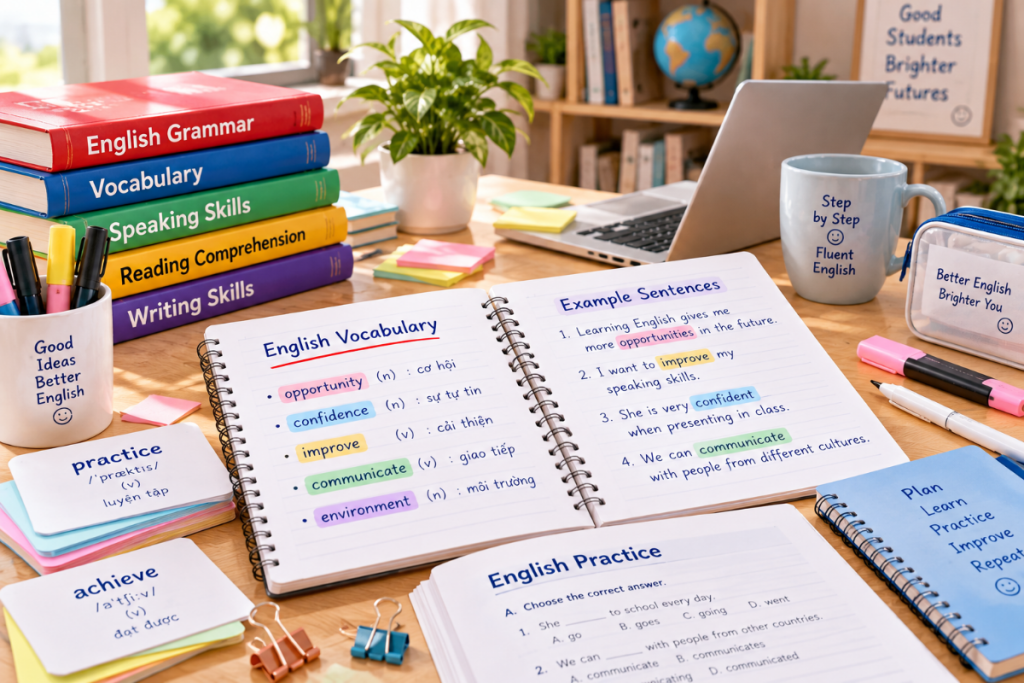
Learning English vocabulary is an important first step for children who are beginning their English journey. At Grade 1, children usually learn familiar words related to their families, classrooms, colors, numbers, animals, and everyday objects. These words help them understand simple instructions, answer basic questions, and communicate in familiar situations.
However, memorizing English words can be challenging when children study without pictures, sounds, or real-life examples. A more engaging approach is to organize Grade 1 English Vocabulary by topic and combine each word with its pronunciation, meaning, and practical use.
In this guide, parents and teachers can explore vocabulary lists, writing practice, exercises, and simple learning strategies to help children build their English foundation step by step.
Why Is Grade 1 English Vocabulary Important?
First-grade students are still developing their reading, listening, speaking, and writing skills. Learning familiar English words helps them become more comfortable with the language and prepares them for more advanced lessons.
Build a Foundation for Basic Communication
Children can use simple vocabulary to introduce themselves, identify family members, name classroom objects, and describe things around them. For example, knowing words such as mother, book, red, and cat allows children to understand and respond to basic questions.
Improve Listening and Speaking Skills
When children recognize common words, they can understand simple classroom instructions more easily. Listening to a word and repeating it aloud also helps them become familiar with English sounds and pronunciation.
Develop Early Reading and Writing Skills
Learning the relationship between letters and sounds helps children recognize written words. Practicing short words regularly can also improve spelling, handwriting, and confidence when completing English exercises.
Grade 1 English Vocabulary by Topic
The following Grade 1 English Vocabulary lists cover eight familiar topics. Each entry includes the English word, IPA pronunciation, and Vietnamese meaning to help Vietnamese-speaking learners understand and practice the words.
Grade 1 English Vocabulary: Family Members
Children often begin learning English through words about the people closest to them. Family vocabulary is useful for introducing family members and answering simple questions.
| English word | IPA | Vietnamese meaning |
| Father | /ˈfɑːðər/ | Bố, cha |
| Mother | /ˈmʌðər/ | Mẹ |
| Brother | /ˈbrʌðər/ | Anh, em trai |
| Sister | /ˈsɪstər/ | Chị, em gái |
| Grandma | /ˈɡrænmɑː/ | Bà |
| Grandpa | /ˈɡrænpɑː/ | Ông |
| Family | /ˈfæməli/ | Gia đình |
| Baby | /ˈbeɪbi/ | Em bé |
Practice: Ask your child, “Who is this?” while showing a family photo. Encourage them to answer with a word or a short sentence, such as “Mother” or “This is my mother.”
Grade 1 English Vocabulary: School Supplies
School supplies are part of children’s daily routines. Learning these words helps them identify classroom objects and follow simple instructions from teachers.
| English word | IPA | Vietnamese meaning |
| Book | /bʊk/ | Sách |
| Bag | /bæɡ/ | Cặp, túi |
| Pen | /pen/ | Bút mực |
| Pencil | /ˈpensəl/ | Bút chì |
| Ruler | /ˈruːlər/ | Thước kẻ |
| Eraser | /ɪˈreɪsər/ | Cục tẩy |
| Desk | /desk/ | Bàn học |
| Chair | /tʃer/ | Ghế |
Practice: Place several school supplies on a table. Say a word and ask your child to point to the matching object. Then switch roles and let your child name each item.
Grade 1 English Vocabulary: Colors
Color words help children describe toys, clothes, school supplies, and objects in their surroundings.
| English word | IPA | Vietnamese meaning |
| Red | /red/ | Màu đỏ |
| Blue | /bluː/ | Màu xanh dương |
| Yellow | /ˈjeloʊ/ | Màu vàng |
| Green | /ɡriːn/ | Màu xanh lá |
| Black | /blæk/ | Màu đen |
| White | /waɪt/ | Màu trắng |
| Pink | /pɪŋk/ | Màu hồng |
| Orange | /ˈɔːrɪndʒ/ | Màu cam |
Practice: Ask your child to find objects around the house. For example, “Find something blue” or “Show me a red pencil.” This activity connects English words with real-life experiences.
Grade 1 English Vocabulary: Numbers
Numbers are useful for counting objects, answering questions about quantities, and completing simple classroom activities.
| English word | IPA | Vietnamese meaning |
| One | /wʌn/ | Một |
| Two | /tuː/ | Hai |
| Three | /θriː/ | Ba |
| Four | /fɔːr/ | Bốn |
| Five | /faɪv/ | Năm |
| Six | /sɪks/ | Sáu |
| Seven | /ˈsevən/ | Bảy |
| Eight | /eɪt/ | Tám |
| Nine | /naɪn/ | Chín |
| Ten | /ten/ | Mười |
Practice: Count fingers, pencils, toys, or building blocks together. Start with numbers from one to five before introducing larger numbers.
Grade 1 English Vocabulary: Animals
Animal vocabulary is often engaging for young learners because they can connect words with pictures, sounds, and familiar stories.
| English word | IPA | Vietnamese meaning |
| Cat | /kæt/ | Con mèo |
| Dog | /dɔːɡ/ | Con chó |
| Bird | /bɜːrd/ | Chim |
| Fish | /fɪʃ/ | Cá |
| Duck | /dʌk/ | Con vịt |
| Chicken | /ˈtʃɪkɪn/ | Gà |
| Rabbit | /ˈræbɪt/ | Thỏ |
| Elephant | /ˈelɪfənt/ | Voi |
Practice: Show your child animal pictures and ask them to name each animal. You can also imitate animal sounds or play a guessing game to make practice more interactive.
Grade 1 English Vocabulary: Fruits
Fruit vocabulary introduces children to words they may hear at home, in shops, or during mealtimes.
| English word | IPA | Vietnamese meaning |
| Apple | /ˈæpəl/ | Táo |
| Banana | /bəˈnænə/ | Chuối |
| Orange | /ˈɔːrɪndʒ/ | Cam |
| Mango | /ˈmæŋɡoʊ/ | Xoài |
| Grape | /ɡreɪp/ | Nho |
| Watermelon | /ˈwɔːtərmelən/ | Dưa hấu |
| Pear | /per/ | Lê |
| Pineapple | /ˈpaɪnæpəl/ | Dứa, thơm |
Practice: Use real fruits or picture cards. Ask questions such as “What is this?” and “Do you like apples?” Encourage your child to answer with a word or a short sentence.
Grade 1 English Vocabulary: Body Parts
Learning body-part vocabulary helps children understand simple instructions and describe themselves.
| English word | IPA | Vietnamese meaning |
| Head | /hed/ | Đầu |
| Eye | /aɪ/ | Mắt |
| Ear | /ɪr/ | Tai |
| Nose | /noʊz/ | Mũi |
| Mouth | /maʊθ/ | Miệng |
| Hand | /hænd/ | Bàn tay |
| Leg | /leɡ/ | Chân |
| Foot | /fʊt/ | Bàn chân |
Practice: Play a simple “Touch your…” game. Give instructions such as “Touch your nose” or “Touch your head” and let your child respond by pointing to the correct body part.
Grade 1 English Vocabulary: Toys
Toys are familiar objects that children can use to practice English through play.
| English word | IPA | Vietnamese meaning |
| Ball | /bɔːl/ | Quả bóng |
| Doll | /dɑːl/ | Búp bê |
| Kite | /kaɪt/ | Diều |
| Car | /kɑːr/ | Ô tô |
| Robot | /ˈroʊbɑːt/ | Người máy |
| Teddy bear | /ˈtedi ber/ | Gấu bông |
| Train | /treɪn/ | Tàu hỏa |
| Puzzle | /ˈpʌzəl/ | Trò chơi ghép hình |
Practice: Let your child choose a favorite toy and describe it using a word they know. For example, they can say “A ball” or “My robot.”
Grade 1 English Vocabulary for Family and Friends
Family and Friends is an English textbook series used in various learning settings. Parents may look for Grade 1 English Vocabulary related to this series to help their children review lessons at home.
The exact vocabulary and lesson sequence may differ by edition, level, and local curriculum. Therefore, use the textbook’s unit headings, pictures, and word lists as the main reference when reviewing a specific lesson.
To make revision more effective:
- Review words by unit: Group words according to the lesson your child has studied.
- Use picture cards: Match each English word with a picture or object.
- Practice pronunciation: Listen to the textbook audio when available and repeat the words together.
- Create simple sentences: Use familiar words in short patterns, such as “It is a cat” or “This is my bag.”
- Review previous lessons: Revisit older words while learning new ones to help reinforce memory.
The vocabulary tables above are supplementary learning materials rather than an official, edition-specific word list from the textbook.
How to Practice Grade 1 English Vocabulary Writing
Writing practice helps children become familiar with English spelling and letter formation. However, copying a word repeatedly without understanding its meaning may not be enough. Combine writing with listening, speaking, and visual recognition.
Trace and Copy Simple Words
Start with short, familiar words such as cat, dog, pen, and book. Show your child how to form each letter, then let them trace the word before copying it independently.
Match Words with Pictures
Prepare picture cards and separate word cards. Ask your child to match each picture with the correct English word before writing it in a notebook.
Practice One Topic at a Time
Focus on a small group of words in each session. For example, practice school supplies on Monday and colors on Tuesday. Adjust the number of words according to your child’s attention span and confidence.
Read Aloud While Writing
Encourage your child to say each word aloud while writing it. This helps connect the word’s spelling, sound, and meaning.
Grade 1 English Vocabulary Exercises
After reviewing the vocabulary lists, children can complete these short activities to check their understanding. Parents can read the questions aloud if their child is still developing reading skills.
Exercise 1: Choose the Correct Answer
Choose the correct English word for each Vietnamese meaning.
- “Con mèo” means:
- Dog
B. Cat
C. Bird - “Màu xanh dương” means:
- Blue
B. Red
C. Yellow - “Bút chì” means:
- Ruler
B. Book
C. Pencil - “Quả chuối” means:
- Apple
B. Banana
C. Mango - “Bàn tay” means:
- Hand
B. Head
C. Foot
Exercise 2: Fill in the Missing Letters
Complete each English word.
- C _ t (Con mèo)
- B _ _ k (Sách)
- D _ g (Con chó)
- P _ n (Bút mực)
- A _ p l e (Quả táo)
Exercise 3: Match the Words with Their Meanings
Match each English word with the correct Vietnamese meaning.
| English word | Vietnamese meaning |
| 1. Mother | A. Con cá |
| 2. Fish | B. Mẹ |
| 3. Chair | C. Màu xanh lá |
| 4. Green | D. Ghế |
| 5. Three | E. Ba |
Exercise 4: Complete the Sentences
Choose a suitable word from the word bank to complete each sentence.
Word bank: cat – red – book – two – nose
- I have a ______.
- This is my ______.
- The apple is ______.
- I have ______ pencils.
- Touch your ______.
Answer Key
Exercise 1: 1. B — Cat; 2. A — Blue; 3. C — Pencil; 4. B — Banana; 5. A — Hand.
Exercise 2: 1. Cat; 2. Book; 3. Dog; 4. Pen; 5. Apple.
Exercise 3: 1. B; 2. A; 3. D; 4. C; 5. E.
Exercise 4: Suggested answers: 1. cat; 2. book; 3. red; 4. two; 5. nose. Depending on the intended context, the first two sentences may accept other grammatically suitable words.
How to Learn Grade 1 English Vocabulary Effectively
Children learn at different speeds, so the best routine is one that fits their interests, attention span, and school schedule. These strategies can make vocabulary review more manageable.
Learn with Pictures and Real Objects
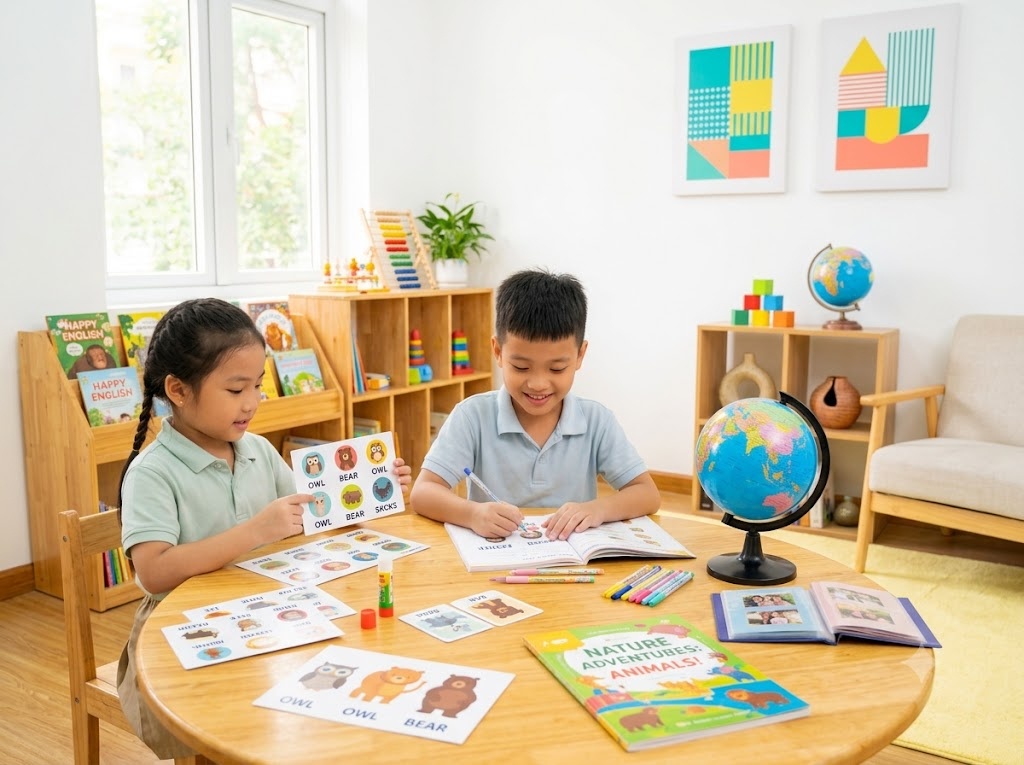
Visual materials help children connect new words with familiar things. Use flashcards, illustrated books, toys, and household objects to introduce vocabulary in context.
Listen and Repeat Every Day
Play age-appropriate English audio and encourage your child to repeat short words or phrases. Keep practice sessions relaxed, with an emphasis on clear pronunciation rather than perfection.
Use Games Instead of Rote Memorization
Try matching cards, guessing games, object hunts, or simple quizzes. Games can make review more engaging while giving children opportunities to recall words independently.
Review Regularly in Short Sessions
A short daily review may be easier to maintain than a long session once a week. Revisit previously learned words, introduce a few new ones, and check understanding through speaking or matching activities.
Encourage Children Without Excessive Pressure
Praise effort and progress rather than expecting immediate mastery. When a child makes a mistake, model the correct word and invite them to try again.
Helping Children Build a Strong English Foundation
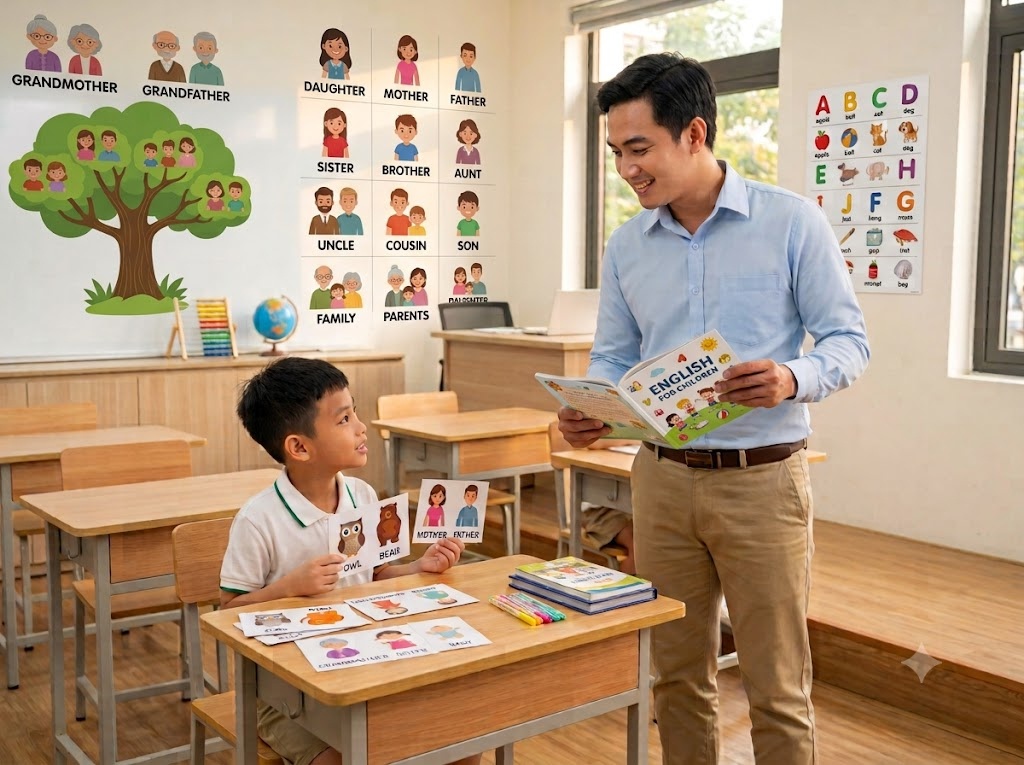
Building vocabulary in Grade 1 is not simply about memorizing a long list of words. Children also need opportunities to hear, recognize, pronounce, read, and use those words in familiar situations.
Start with everyday topics such as family, school supplies, colors, numbers, animals, fruits, body parts, and toys. Combine picture-based learning with short writing activities, simple exercises, and regular revision. As children become more confident, introduce short phrases and sentences that help them use vocabulary in context.
Parents can support this process by creating a positive learning environment at home and following the pace of the child’s school lessons. With consistent practice and encouragement, children can gradually develop the vocabulary skills they need for future English learning.
Frequently Asked Questions About Grade 1 English Vocabulary
How many English words should a Grade 1 student learn?
The expected number varies by curriculum, textbook, and learning program. Instead of focusing only on a fixed number, prioritize familiar words that children can recognize, pronounce, and use appropriately.
Which topics should children learn first?
Family members, classroom objects, colors, numbers, animals, and common everyday items are practical starting points because children can connect them with their surroundings.
How can parents help children remember new English words?
Use pictures, real objects, repetition, short games, and simple questions. Reviewing older words regularly can also help children retain what they have learned.
Is Family and Friends suitable for Grade 1 English vocabulary practice?
It can be a useful resource when it matches the child’s level and learning program. Parents should check the specific edition and lesson sequence to ensure that their practice materials align with the textbook.
How long should children practice English vocabulary each day?
A short, consistent session can be a practical starting point. Adjust the duration according to the child’s attention span, school workload, and interest, and include breaks when needed.
Keywords:
- 71 Grade 1 English vocabulary words by topic
- Grade 1 English vocabulary exercises
- Grade 1 English vocabulary practice
- Grade 1 English vocabulary for Family and Friends
- How to learn Grade 1 English vocabulary
