

Among IELTS candidates, the Cambridge Practice Tests for IELTS series is widely regarded as an essential study resource. In particular, Cambridge 11 represents an important development in the series, as the publisher began presenting the Academic and General Training materials in separate books.
Practicing with these tests helps candidates become familiar with the actual examination format and difficulty level. It is also an effective way to develop analytical thinking and improve time management under exam conditions.
This article provides an in-depth review of the book’s content and practical tips to help you make the most of this resource throughout your IELTS preparation journey.
Why Is IELTS Cambridge 11 a Popular Choice?
IELTS Cambridge 11 provides practice tests that reflect established IELTS examination formats. Compared with some earlier volumes, this book covers a range of academic topics that help learners prepare for the types of subjects they may encounter in the actual examination.
Each practice test follows the IELTS format. The questions cover different levels of difficulty, allowing learners to evaluate their current proficiency and identify areas that require further improvement.
In addition, the way the materials are organized helps candidates focus on their specific examination goals. By using the appropriate Academic or General Training materials, learners can concentrate on the test format relevant to their needs and make better use of their study time at home.

A Detailed Look at the Test Structure in Cambridge 11
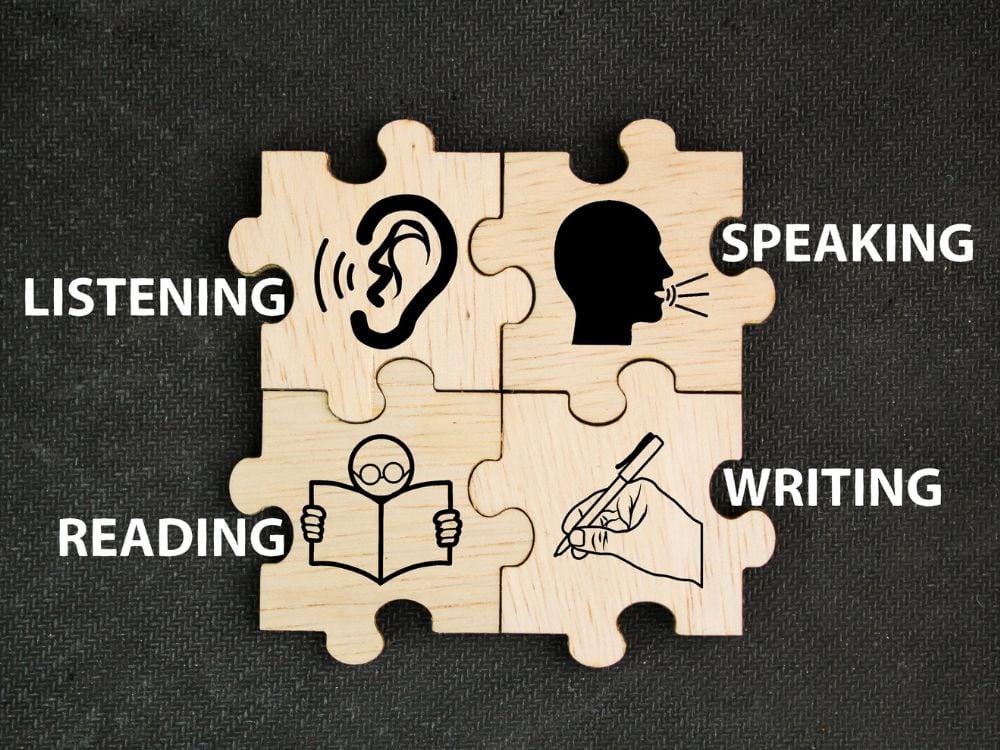
The book contains four complete practice tests, covering the four IELTS skills: Listening, Speaking, Reading, and Writing. It also includes an Answer Key and detailed Tapescripts at the end, allowing learners to check their answers and review their performance independently.
The accompanying materials also include audio recordings for Listening practice. These resources allow you to recreate examination conditions more realistically and develop greater confidence before taking the actual test.
In addition to the practice tests, the book provides Writing sample answers with examiner comments. These are valuable resources for understanding IELTS assessment criteria and learning how to develop ideas effectively to achieve a higher band score.
Listening Skills with Cambridge 11 Listening Test 1
The Listening section is considered challenging because it features a variety of English accents. When you begin Cambridge 11 Listening Test 1, you will encounter different question types, ranging from completing personal information to understanding more complex academic discussions.
To achieve a high score in Cambridge 11 Listening Test 2, you should develop your ability to identify keywords and recognize important information. Repeated listening practice can help you become more familiar with connected speech and sound changes commonly found in natural spoken English.
See also: How to Manage Your Time Effectively in the IELTS Reading Test
Reading Skills in Cambridge 11 Reading Test 1
Reading is often one of the most time-consuming sections for IELTS candidates. In Cambridge 11 Reading Test 1, you will encounter lengthy passages containing a wide range of academic vocabulary related to subjects such as science, history, and psychology.
When completing Cambridge 11 Test 1 Reading, focus on applying skimming and scanning techniques to locate information quickly. Regular practice can improve your reading speed and logical reasoning, helping you handle question types such as True/False/Not Given more effectively.
[Image]
A Cambridge 11 Test 1 Study Plan for Beginners
If you are just starting the intensive test-practice stage, you should not attempt to complete all four tests at once. Instead, begin by working through individual sections of Cambridge 11 Test 1 to understand the test structure and recognize common traps in each skill.
When completing Cambridge 11 Test 1 Listening, try to predict the type of word required before the recording begins. After finishing the exercise, avoid checking the answers immediately. Listen to the recording a second time and attempt to correct spelling mistakes or errors involving singular and plural forms independently.
Once you become comfortable with the pace and format, gradually move on to Cambridge 11 Listening Test 2 and the remaining practice tests.
Maintaining a daily test-practice routine can help you develop stronger language-processing skills and feel more confident when facing the actual IELTS examination.
Key Differences Between Cambridge 11 and Earlier Editions
Compared with earlier editions, Cambridge 11 features improvements in the presentation of illustrations and charts in Writing Task 1. The topics in Cambridge 11 Test 4 also cover a range of issues that encourage candidates to analyze and discuss different social perspectives.
In particular, Cambridge 11 Test 2 Listening may include discussions that require candidates to understand the speakers’ attitudes and viewpoints. This is an important area to focus on when developing your ability to interpret implied meaning.
Finally, practicing Cambridge 11 Test 1 Listening alongside the corresponding Reading exercises can help you build topic-based vocabulary systematically. This vocabulary development can support not only your Listening and Reading performance but also your Speaking and Writing skills.
IELTS Skills Practice Exercises
To support your preparation, the following exercises are based on familiar IELTS question formats. Complete them carefully to reinforce your knowledge and assess your understanding.
Exercise 1: Match Vocabulary Words with Their Synonyms
Understanding synonyms and paraphrasing is extremely important in IELTS. Match the words in the left column with their corresponding synonyms on the right.
- Vital
- Deteriorate
- Significant
- Acquire
- Mitigate
- Important
- Obtain
- Reduce
- Worsen
- Substantial
Exercise 2: Identify True, False, or Not Given Statements
Read the following information and answer the questions below.
“The Cambridge 11 book is an official preparation resource published by experts at Cambridge University Press. The book contains four complete practice tests for the Academic module and is published separately from the General Training version.”
- Cambridge 11 was written by teachers from Oxford University.
- There are four full practice tests in the Academic version of the book.
- The Academic and General Training versions are now sold as separate books.
- Students find the Listening test in this book easier than in previous versions.
- The book provides sample Writing answers with examiner comments.
Practice Exercise Answer Key
Below are the answers. Compare them with your responses to evaluate your understanding.
Answers to Exercise 1
- A
- D
- E
- B
- C
Answers to Exercise 2
- False: The book is published by Cambridge University Press.
- True
- True
- Not Given: The information does not mention students’ opinions about the difficulty of the Listening test.
- True
See also: A Collection of the Most Common IELTS Topic-Based Vocabulary
Owning and thoroughly working through Cambridge 11 can be a strategic step toward achieving your IELTS goals. The combination of realistic practice tests and detailed answer resources makes this book a useful tool for independent study.
Stay consistent with your study plan and dedicate enough time to analyzing each mistake after completing a practice test. Understanding why an answer is incorrect is just as important as knowing the correct answer.
We hope you have a productive preparation journey and achieve your desired band score in your upcoming examination. Read our next articles for more useful IELTS study materials and practical preparation tips!
Frequently Asked Questions
What proficiency level is Cambridge 11 suitable for?
This book is most suitable for learners who already have a basic English foundation, approximately IELTS Band 5.0 or above, and are beginning intensive test practice. If you are a beginner, focus on strengthening your grammar and vocabulary before attempting Cambridge 11.
How can I use the Answer Key effectively?
Do not simply check how many questions you answered correctly. Read the Cambridge 11 Tapescripts carefully to identify words you misheard or failed to recognize.
For Reading, look for synonyms and paraphrases connecting the questions with the relevant passages. This will help you understand how IELTS questions present information differently and recognize common traps.
Should I practice Cambridge 11 before using newer editions?
Yes. Although newer volumes, such as Cambridge 18 and Cambridge 19, are available, the Reading passages in Cambridge 11 remain useful for developing fundamental examination skills and analytical thinking before moving on to more recent practice materials.
Keywords:
- IELTS Cambridge 11 PDF
- Cambridge 11 12
- Cambridge 11 Listening
- Cambridge 11 Audio
- Cambridge 11 Test 1
- IELTS Cambridge 11 Reading
- Cambridge 11 Listening Test 1
- Cambridge 11 Test 2
