

The verb to be is one of the most important verbs in English. It is used to describe people, things, places, conditions, and identities. It also plays an essential role in forming continuous tenses and passive sentences.
Understanding how to use the verb to be correctly will help you build clear, accurate sentences in both spoken and written English. In this guide, you will learn its forms, sentence structures, common uses, and how to avoid frequent mistakes through practical examples and exercises.
What Is the Verb to Be?
The verb to be is an irregular verb that can express a state, identity, characteristic, condition, or location. Unlike many other English verbs, it changes its form depending on the subject and tense.
The most common forms of the verb to be are:
- Base form: be
- Present tense: am, is, are
- Past tense: was, were
- Past participle: been
- Present participle: being
Here are some examples of the verb to be in sentences:
- I am a student.
- She is very friendly.
- They are at home.
- He was tired yesterday.
- We have been busy all morning.
In these examples, the verb to be connects the subject to information about their identity, characteristics, location, or condition.
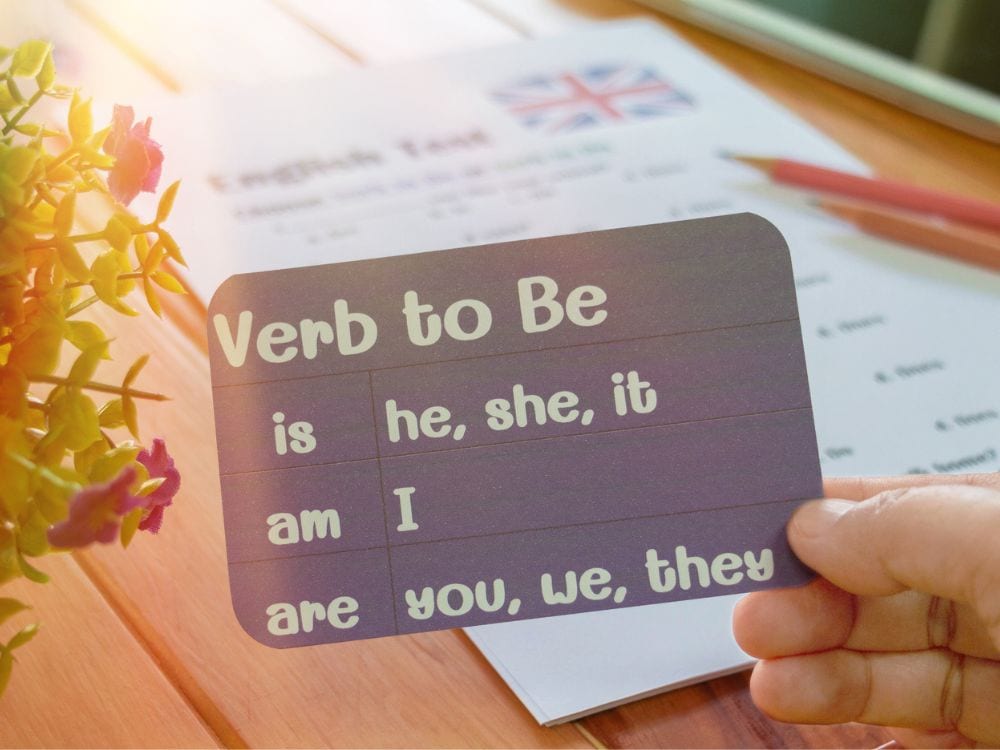
Forms of the Verb to Be
The form of the verb to be depends on the subject and the tense. Learning these forms is essential for constructing grammatically correct sentences.
The verb to be in the present tense
In the present simple tense, the verb to be has three forms: am, is, and are.
| Subject | Verb to be | Example |
| I | am | I am happy. |
| He | is | He is my brother. |
| She | is | She is a teacher. |
| It | is | It is cold today. |
| You | are | You are kind. |
| We | are | We are ready. |
| They | are | They are students. |
Use am with I, is with he, she, and it, and are with you, we, and they.
Examples:
- I am interested in English.
- My mother is at work.
- The children are in the garden.
The verb to be in the past tense
In the past simple tense, the verb to be has two forms: was and were.
| Subject | Verb to be | Example |
| I | was | I was busy yesterday. |
| He | was | He was at school. |
| She | was | She was happy. |
| It | was | It was cold last night. |
| You | were | You were right. |
| We | were | We were at the office. |
| They | were | They were tired. |
Use was with I, he, she, and it. Use were with you, we, and they.
Examples:
- I was sick last week.
- The meeting was interesting.
- We were late for class.
The verb to be in other forms
The verb to be also has forms used in perfect tenses, continuous structures, and passive voice.
| Form | Main use | Example |
| Be | Base form | I want to be a doctor. |
| Being | Continuous or passive structures | He is being careful. |
| Been | Perfect tenses | She has been busy. |
Examples:
- You should be more careful.
- The room is being cleaned.
- They have been friends for years.
Sentence Structures with the Verb to Be
The verb to be follows different patterns in affirmative, negative, and interrogative sentences. Unlike most ordinary verbs, it usually does not need the auxiliary verb do to form questions or negatives in the present and past simple tenses.
Affirmative sentences
The basic structure of an affirmative sentence is:
Subject + verb to be + complement
The complement can be a noun, an adjective, a prepositional phrase, or another type of expression that provides information about the subject.
Examples:
- I am a university student.
- She is intelligent.
- They are in the classroom.
- The weather was beautiful yesterday.
The verb to be connects the subject with the information that follows it.
Negative sentences
To make a negative sentence, add not after the verb to be.
Subject + verb to be + not + complement
Examples:
- I am not hungry.
- He is not at home.
- We are not ready.
- She was not happy with the result.
- They were not at the meeting.
In everyday English, contractions are common:
- is not → isn’t
- are not → aren’t
- was not → wasn’t
- were not → weren’t
For example, She isn’t busy today is a natural alternative to She is not busy today.
Note that am not is usually not contracted in standard English as amn’t. Instead, speakers generally say I’m not.
Interrogative sentences
To form a yes/no question, place the verb to be before the subject.
Verb to be + subject + complement?
Examples:
- Am I late?
- Is he your teacher?
- Are they at home?
- Was she tired yesterday?
- Were you busy last night?
Short answers commonly use the verb to be again:
- Are you ready? — Yes, I am. / No, I’m not.
- Is he your brother? — Yes, he is. / No, he isn’t.
- Were they at school? — Yes, they were. / No, they weren’t.
Do not use do or does to form ordinary present simple questions with the verb to be.
Incorrect: Does she be happy?
Correct: Is she happy?
Wh-questions with the verb to be
Wh-questions begin with question words such as what, where, when, why, and who. The verb to be usually comes before the subject.
Question word + verb to be + subject + complement?
Examples:
- What is your name?
- Where are they?
- Why was he absent yesterday?
- Who is your favorite teacher?
- When is the meeting?
These questions help you ask for information about identity, location, reasons, and time.
Common Uses of the Verb to Be
The verb to be has several important functions in English. Recognizing these uses will help you understand sentences and choose the correct grammatical structure.
Describing people and things
Use the verb to be to describe appearance, personality, feelings, conditions, and characteristics.
Examples:
- My sister is friendly.
- The coffee is hot.
- I am excited about the trip.
- The children were quiet during the lesson.
In these sentences, the verb to be links the subject to an adjective or descriptive phrase.
Talking about names, identities, and professions
The verb to be is commonly used to identify people or explain what someone does.
Examples:
- I am Anna.
- He is a doctor.
- They are software developers.
- My father was a teacher before he retired.
When using a singular countable profession or job title, remember to include an article such as a or an.
Correct: She is an engineer.
Incorrect: She is engineer.
Describing locations
Use the verb to be with a place or prepositional phrase to explain where someone or something is located.
Examples:
- The keys are on the table.
- My parents are at home.
- The office is near the station.
- We were in Da Nang last weekend.
The verb to be can also be used to ask about locations:
- Where is your phone?
- Where are the students?
Talking about age, time, and dates
In English, age is commonly expressed with the verb to be rather than the verb have.
Examples:
- I am 23 years old.
- My brother is ten years old.
- It is seven o’clock.
- Today is Monday.
- My birthday is in March.
Avoid translating directly from languages that use a different verb to express age.
Incorrect: I have 23 years old.
Correct: I am 23 years old.
Forming continuous tenses
The verb to be is used as an auxiliary verb to form continuous tenses. It is followed by the present participle of the main verb, which usually ends in -ing.
Subject + verb to be + verb-ing
Examples:
- I am studying English.
- She is cooking dinner.
- They are playing football.
- He was working when I called.
- We were watching a movie at eight o’clock.
The form of the verb to be changes according to the tense and subject, while the main verb takes the -ing form.
Forming the passive voice
The verb to be is also used to form passive sentences. In the passive voice, the subject receives the action rather than performing it.
Subject + verb to be + past participle
Examples:
- The room is cleaned every day.
- The report was completed yesterday.
- The emails are sent every morning.
- The new bridge will be opened next month.
The form of the verb to be depends on the tense. The main verb appears in its past participle form.
Using the verb to be in common expressions
The verb to be appears in many everyday expressions.
Examples:
- Be careful when crossing the road.
- I am afraid of spiders.
- She is interested in photography.
- We are ready for the meeting.
- He is good at mathematics.
Learning these expressions as complete phrases can make your English sound more natural.
What Comes After the Verb to Be?
The word or phrase following the verb to be depends on how it is used in a sentence.
A noun or noun phrase
A noun can identify the subject or explain what someone or something is.
Examples:
- She is a student.
- They are my colleagues.
- This is our new office.
An adjective
An adjective describes a quality, feeling, or condition.
Examples:
- I am happy.
- The room is clean.
- The children were excited.
A prepositional phrase
A prepositional phrase can describe location, time, or another relationship.
Examples:
- The book is on the desk.
- She is at work.
- We were in the meeting room.
A verb in the -ing form
When the verb to be is used in a continuous tense, it is followed by a present participle.
Examples:
- He is sleeping.
- They are studying.
- I was driving home.
A past participle
In passive constructions, the verb to be is followed by a past participle.
Examples:
- The window was broken.
- The documents are checked every day.
- The package was delivered this morning.
Remember that the grammatical structure determines which form should follow the verb to be.
The Difference Between the Verb to Be and Ordinary Verbs
The verb to be behaves differently from most ordinary verbs in the present and past simple tenses.
Ordinary verbs generally use do or does for questions and negatives in the present simple, and did in the past simple. The verb to be usually forms questions by moving the verb before the subject and forms negatives by adding not.
| Sentence type | Verb to be | Ordinary verb |
| Affirmative | She is happy. | She likes music. |
| Negative | She is not happy. | She does not like music. |
| Question | Is she happy? | Does she like music? |
| Past negative | She was not happy. | She did not like music. |
| Past question | Was she happy? | Did she like music? |
Compare these examples:
- Correct: Are you tired?
- Incorrect: Do you are tired?
- Correct: He doesn’t like coffee.
- Incorrect: He isn’t like coffee.
However, the verb to be can appear with auxiliary verbs in other structures, such as has been working or will be completed.
Common Mistakes When Using the Verb to Be
English learners often make mistakes when choosing the correct form of the verb to be or combining it with other verbs.
Using the wrong form
The verb to be must agree with the subject and tense.
Incorrect: They is my friends.
Correct: They are my friends.
Incorrect: I were at home yesterday.
Correct: I was at home yesterday.
Using do or does with the verb to be
Do not use do or does to form ordinary questions and negatives when the verb to be is the main verb.
Incorrect: Does she be busy?
Correct: Is she busy?
Incorrect: I don’t am hungry.
Correct: I am not hungry.
Forgetting the verb to be before an adjective
In a standard English sentence, an adjective describing the subject usually needs a linking verb.
Incorrect: The weather very cold today.
Correct: The weather is very cold today.
Incorrect: They happy with the result.
Correct: They are happy with the result.
Using the wrong form after the verb to be
Different grammatical structures require different forms after the verb to be.
Incorrect: She is study English.
Correct: She is studying English.
Incorrect: The letter was write yesterday.
Correct: The letter was written yesterday.
Confusing the verb to be with have
English uses the verb to be for age and many descriptions of condition, while have expresses possession or certain experiences.
- I am 23 years old.
- I have a new laptop.
- She is tired.
- She has a headache.
Understanding the meaning of each verb helps you avoid direct translation errors.
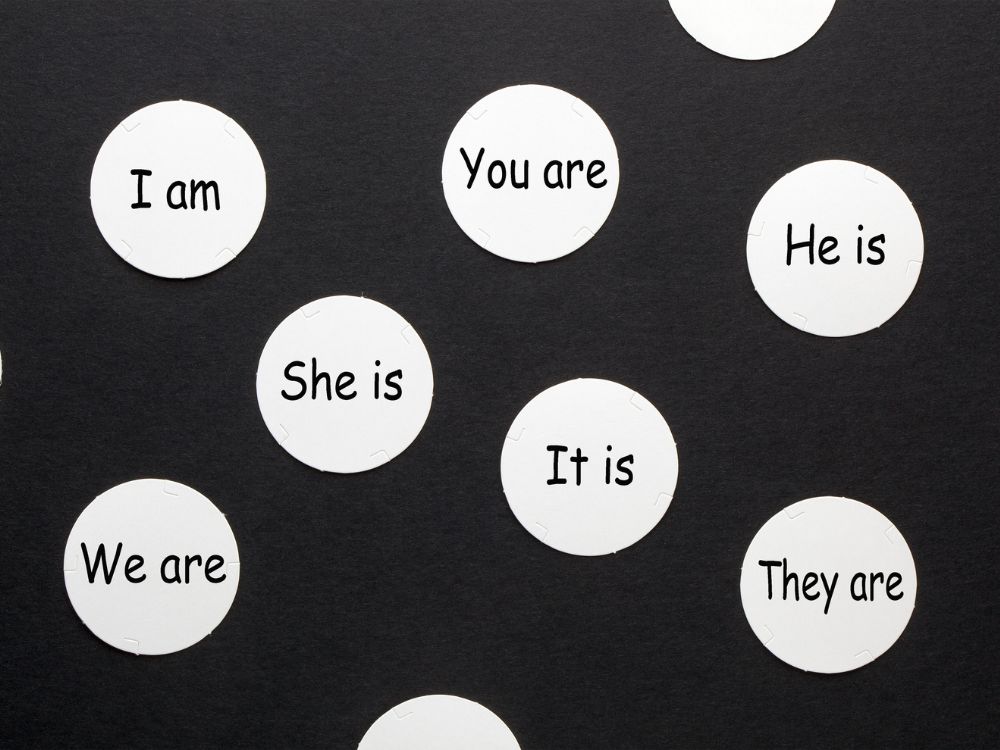
Practice Exercises: The Verb to Be
Complete the following exercises by choosing the correct form of the verb to be. Try answering the questions before checking the answer key.
Exercise A: Fill in the blanks
Complete each sentence with am, is, are, was, or were.
- I _____ very happy today.
- She _____ my English teacher.
- They _____ at the library yesterday.
- We _____ busy last Monday.
- He _____ not interested in football.
- _____ you ready for the exam?
- The weather _____ beautiful last weekend.
- My parents _____ at home now.
- _____ she absent from class yesterday?
- You _____ very helpful.
Exercise B: Correct the mistakes
Rewrite each sentence correctly.
- She are my best friend.
- I is tired after work.
- Do they be at home?
- He not is happy today.
- We was late for the meeting.
- The children is playing outside.
- The documents was signed yesterday.
- I have 23 years old.
Exercise C: Choose the correct answer
- My brother _____ a university student.
- A. am
- B. is
- C. are
- D. be
- _____ they at the office yesterday?
- A. Was
- B. Is
- C. Were
- D. Are
- She _____ watching television right now.
- A. am
- B. are
- C. is
- D. were
- The report _____ completed last Friday.
- A. was
- B. were
- C. are
- D. be
- Which sentence is grammatically correct?
- A. He don’t be tired.
- B. He is not tired.
- C. He not is tired.
- D. He does not tired.
Answer Key
Exercise A
- I am very happy today.
- She is my English teacher.
- They were at the library yesterday.
- We were busy last Monday.
- He is not interested in football.
- Are you ready for the exam?
- The weather was beautiful last weekend.
- My parents are at home now.
- Was she absent from class yesterday?
- You were very helpful. (This sentence refers to a past situation; if describing the present, use are.)
Exercise B
- She is my best friend.
- I am tired after work.
- Are they at home?
- He is not happy today.
- We were late for the meeting.
- The children are playing outside.
- The documents were signed yesterday.
- I am 23 years old.
Exercise C
- B. is
- C. Were
- C. is
- A. was
- B. He is not tired.
The key to mastering the verb to be is to understand the relationship between the subject, tense, and sentence structure. Practice using am, is, are, was, and were in different contexts until choosing the correct form becomes natural.
Frequently Asked Questions About the Verb to Be
What is the verb to be in English?
The verb to be is an irregular verb used to describe identity, characteristics, conditions, and locations. Its main forms include be, am, is, are, was, were, being, and been.
What are the three present forms of the verb to be?
The three present forms are am, is, and are. Use am with I, is with he, she, and it, and are with you, we, and they.
How do you make negative sentences with the verb to be?
Add not after the verb to be.
Examples:
- I am not tired.
- She is not at home.
- They were not ready.
How do you form questions with the verb to be?
Place the verb to be before the subject.
Examples:
- Are you a student?
- Is he your manager?
- Were they at school yesterday?
Is the verb to be an auxiliary verb?
Yes. The verb to be can function as a main verb, as in She is happy, or as an auxiliary verb, as in She is studying and The room was cleaned.
What is the difference between be, being, and been?
Be is the base form, being is the present participle, and been is the past participle.
Examples:
- I want to be a teacher.
- He is being careful.
- We have been busy.
Keyword:
- verb to be exercises
- verb to be rules
- forms of the verb to be
- verb to be sentence structure
- verb to be in English grammar
