
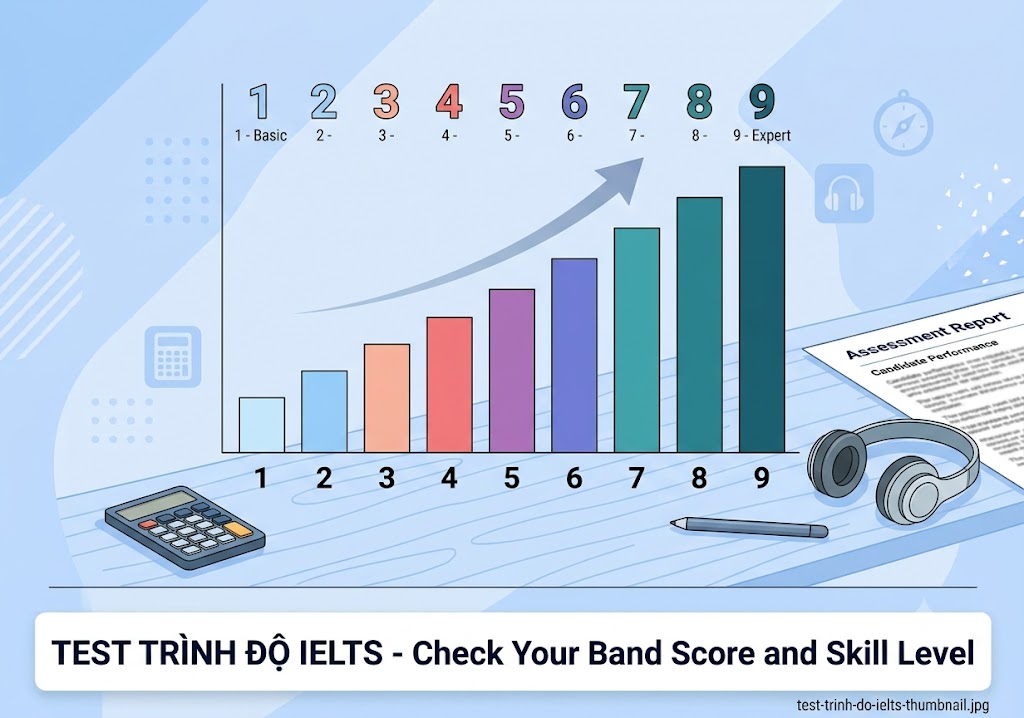
Are you starting your journey towards an internationally recognised English qualification but unsure of your current proficiency level? Taking an IELTS level test is an important first step towards identifying your strengths, understanding your weaknesses, and developing a suitable study plan.
Today, numerous online tools allow learners to assess their English proficiency quickly and conveniently. Understanding your starting level can help you save time, reduce unnecessary study costs, and focus on the skills that need the most improvement.
In this guide, we will explore effective ways to assess your IELTS level and help you choose the most suitable testing method for your learning goals.
Why Should You Take an IELTS Level Test Before Studying?
Many learners skip the initial assessment and enrol in courses without understanding their actual abilities. This can lead to studying material that is too advanced or spending time reviewing concepts they have already mastered.
Taking a reliable IELTS level test helps you develop a clearer picture of your current English proficiency. You can identify which skills you perform well in and which areas require further development.
Knowing your approximate starting band score also allows you to set realistic goals and allocate study time more effectively across the four IELTS skills.
Identify Your Current IELTS Band Score
A well-designed assessment can help estimate your current proficiency in relation to the IELTS band scale, which ranges from 0 to 9.
Understanding your starting level helps you select appropriate textbooks, courses, and practice materials. It also prevents you from becoming overwhelmed by advanced academic content before you have developed the necessary foundations.
Keep in mind that a short online assessment may not provide a reliable overall IELTS band score, particularly if it does not evaluate all four skills.
Related article: How to Study IELTS at Home from Scratch.
Save Time and Money on IELTS Preparation
Following an unsuitable study plan can result in months of inefficient preparation without meaningful progress. Learners may spend money on courses that do not address their actual weaknesses.
By identifying gaps in your knowledge early, you can focus on the areas that need improvement and make better use of your available resources.
Some learners may achieve their goals within three to four months, while others require considerably longer. The timeline depends on their starting proficiency, target band score, study intensity, and learning environment.
Popular Ways to Take an IELTS Level Test
Learners can choose from several assessment methods depending on their goals, budget, and available time.
Each method has its own advantages and limitations. Understanding these differences will help you select the most appropriate option.
Online testing has become increasingly popular because of its convenience, while in-person assessments can provide a more personalised evaluation and a realistic testing environment.
Assess Your English Proficiency at a Test Centre
Taking an assessment at a reputable language centre can provide a structured testing experience. You may complete exercises under timed conditions similar to those used in an actual IELTS examination.
Depending on the provider, the assessment may cover Listening, Reading, Writing, and Speaking. The Speaking component may involve a direct conversation with a qualified instructor.
One advantage of an in-person assessment is the opportunity to receive individual feedback, particularly for productive skills such as Writing and Speaking.
However, this option may involve a fee, advance booking, and additional travel time. The time required to receive your results depends on the provider and the type of assessment.
Choose the Convenience of an Online IELTS Level Test
If you have a busy schedule, an online IELTS level test offers a flexible way to assess your English proficiency. You can usually complete the assessment from home whenever it suits you.
All you generally need is a computer or another compatible device and a stable internet connection.
Image suggestion: A student concentrating on an online IELTS practice test at home.
Some platforms use automated scoring or artificial intelligence to provide quick feedback. However, the quality and reliability of these assessments vary, particularly for Writing and Speaking.
For the most useful results, choose a platform that clearly explains its scoring methods and limitations.
Top Trusted Platforms for a Free IELTS Level Test Online
With so many websites available, choosing reliable assessment resources can be challenging. It is important to prioritise providers that offer accurate information, appropriate question types, and clear explanations.
Official IELTS preparation resources are useful for understanding the examination format and practising representative questions. Some platforms also offer free sample tests or individual skill assessments.
Before relying on any online result, check whether the test evaluates all four skills or only selected parts of the examination.
Assess Your Skills with Official IDP and British Council Resources
IDP IELTS and the British Council are established organisations involved in delivering IELTS examinations and providing preparation resources.
Their official websites offer information about the test format and access to various preparation materials, including sample questions and practice activities.
These resources can help you become familiar with the question types and expectations of the computer-delivered IELTS test.
However, not every official practice resource is a complete placement test, and completing sample questions does not automatically produce an official IELTS band score.
Explore Popular Free Online IELTS Assessment Tools
In addition to official resources, you can explore reputable educational websites that provide online practice tests.
Some platforms offer timed Listening and Reading assessments with answer keys and explanations. Others provide exercises that help you evaluate your vocabulary, grammar, and general English proficiency.
Image suggestion: An online assessment dashboard showing a learner’s performance across different English skills.
A free IELTS level test online can be a convenient starting point for identifying areas that require further practice.
For the most reliable assessment, compare your results across appropriate resources and seek professional feedback if you need a more comprehensive evaluation.
Understanding the Structure of an IELTS Level Test
A short IELTS placement test may use selected questions from the actual examination format to assess your abilities within a limited period.
Many quick assessments focus on Listening and Reading because these sections contain objectively scored questions that are relatively straightforward to mark automatically.
Writing and Speaking may be assessed separately, sometimes with automated tools that analyse language features and provide estimated feedback.
Because short assessments may not cover every skill or question type, their results should be interpreted as an indication of proficiency rather than a definitive overall IELTS score.
Listening and Reading Assessment
These sections may contain multiple-choice questions, gap-filling exercises, matching tasks, and other question types.
Depending on the assessment, you may complete between 20 and 40 questions within a limited time. The content can range from everyday conversations to academic passages.
Your performance can provide useful information about reading comprehension, listening accuracy, vocabulary knowledge, and the ability to identify relevant details.
However, a short test cannot fully measure every aspect of these skills. Full-length practice tests provide a more comprehensive assessment of your readiness for the actual examination.
Writing and Speaking Assessment
Some online tests ask you to write a short response or record yourself answering a Speaking question.
The assessment may consider vocabulary, grammatical accuracy, fluency, pronunciation, and the organisation of ideas, depending on the tool.
Automated feedback can help identify certain language patterns, but it may not fully evaluate argument development, coherence, or spoken communication in the same way as an experienced IELTS teacher.
If you want a more accurate assessment of these skills, consider asking a qualified instructor to review your work and provide detailed feedback.
Important Tips for Getting Accurate Test Results
To ensure that your assessment reflects your actual ability, prepare a suitable testing environment and approach the test seriously.
Some learners use dictionaries, translation tools, or external resources while answering questions. Although these tools can support learning, using them during an initial assessment may distort the results.
Follow these recommendations to obtain a more meaningful indication of your current proficiency.
Prepare a Quiet Environment and Reliable Equipment
Choose a quiet place where you can concentrate without interruptions. Background noise can affect your Listening performance and make it difficult to assess your abilities accurately.
Check your headphones, keyboard, and internet connection before starting an online assessment.
Technical problems can interrupt your concentration and affect your results, so make sure your equipment works properly before beginning.
Follow the Time Limits Carefully
Avoid pausing the test to take breaks or look up unfamiliar words if the assessment is designed to be completed under timed conditions.
Completing the test continuously provides a better indication of your ability to manage time and maintain concentration.
Effective time management is an important part of IELTS preparation. Practising within the appropriate limits can help you identify questions that take too long and develop more efficient strategies.
Taking an IELTS level test is an essential first step for anyone planning to improve their English proficiency and prepare for the IELTS examination.
A reliable assessment can help you understand your starting point, identify weaknesses, and develop a more efficient study plan. However, remember that short online tests provide estimates rather than guaranteed official band scores.
Start with a suitable assessment, review your results carefully, and choose learning materials that address your specific needs. With consistent practice and a well-planned approach, you can make steady progress towards your target IELTS band score.
Frequently Asked Questions (FAQs)
1. Are online IELTS level test results as accurate as official IELTS results?
Reliable online tests can provide useful estimates, particularly for Listening and Reading. However, Writing and Speaking assessments may be less precise, so online results should be treated as guidance rather than official IELTS scores.
2. How often should I reassess my IELTS level?
Reassessing your proficiency every two to three months can be useful if you study consistently. Regular assessments help you monitor progress, identify persistent weaknesses, and adjust your learning plan when necessary.
3. Should beginners take a complete IELTS practice test?
Beginners do not necessarily need to start with a full-length test lasting nearly three hours. Shorter assessments focusing on basic grammar, vocabulary, and individual skills can provide a more manageable starting point before progressing to complete practice tests.
Keyword:
- Test trình độ ielts
- Test trình độ ielts online free
- Test trình độ ielts online
- Test trình độ ielts free
- Test ielts free
