
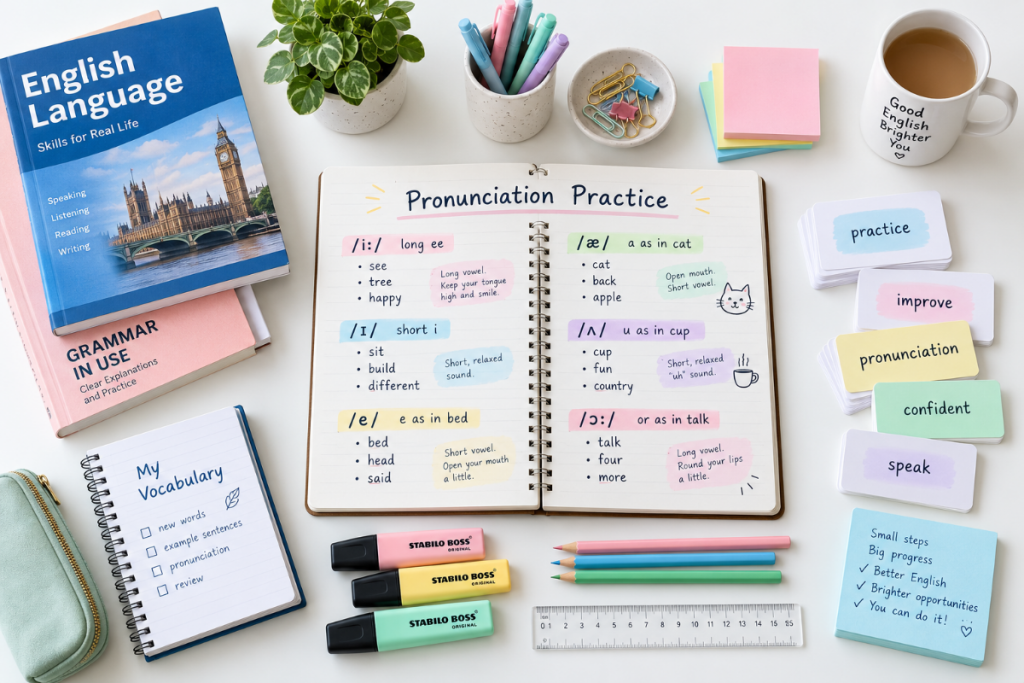
Grade 3 English Review helps students consolidate essential knowledge, practice familiar language patterns, and prepare for English tests. At this level, children learn vocabulary related to their daily lives, ask and answer simple questions, and use basic grammar to communicate about people, objects, places, and activities.
With a structured review plan, students can revisit important lessons, identify areas that need improvement, and become more confident when using English.
This guide covers key vocabulary, common sentence patterns, essential grammar points, practice exercises with answers, and useful study tips based on the Global Success Grade 3 English curriculum.
Why Is Grade 3 English Review Important?
Regular Grade 3 English Review helps children remember what they have learned and apply it more accurately. Instead of memorizing isolated words or grammar rules, students can practice using English in familiar situations.
Reviewing English regularly offers several benefits:
- Strengthening vocabulary: Students recall words about family, school, colors, animals, food, and everyday activities.
- Improving sentence formation: Children learn how to arrange words correctly and use common question-and-answer patterns.
- Reinforcing grammar: Reviewing basic structures helps students distinguish between forms such as am, is, and are.
- Preparing for tests: Practice exercises help children become familiar with multiple-choice questions, word ordering, and gap-filling tasks.
- Building confidence: Repeated practice allows students to use familiar English expressions more naturally.
Parents can support their children by creating short, consistent review sessions rather than expecting them to study for long periods at once.

Grade 3 English Review: Essential Vocabulary
Vocabulary is an important foundation for Grade 3 English Review. Students should recognize common words, understand their meanings, and use them in simple sentences.
The Global Success Grade 3 English textbook introduces vocabulary through familiar topics across the Starter section and Units 1–20. Reviewing words by topic can make learning more organized and memorable.
Everyday Vocabulary for Grade 3 Students
| Topic | Example vocabulary | Vietnamese meaning |
| Greetings | Hello, goodbye, hi | Xin chào, tạm biệt |
| Family | Father, mother, brother, sister | Bố, mẹ, anh/em trai, chị/em gái |
| School | School, classroom, teacher, pupil | Trường học, lớp học, giáo viên, học sinh |
| School supplies | Book, pen, pencil, ruler | Sách, bút mực, bút chì, thước kẻ |
| Colors | Red, blue, yellow, green | Đỏ, xanh dương, vàng, xanh lá |
| Numbers | One, two, three, four, five | Một, hai, ba, bốn, năm |
| Toys | Ball, doll, robot, kite | Quả bóng, búp bê, rô-bốt, diều |
| Animals | Cat, dog, bird, fish | Mèo, chó, chim, cá |
| Food and drinks | Rice, bread, milk, water | Cơm, bánh mì, sữa, nước |
| Body parts | Head, eyes, ears, hands | Đầu, mắt, tai, bàn tay |
| Clothes | Shirt, dress, trousers, shoes | Áo sơ mi, váy, quần dài, giày |
| Weather | Sunny, rainy, windy, cloudy | Có nắng, có mưa, có gió, nhiều mây |
| Locations | Home, school, park, zoo | Nhà, trường học, công viên, sở thú |
| Daily activities | Read, write, sing, dance | Đọc, viết, hát, nhảy |
Students should practice both recognizing words and using them in context. For example, when learning school supplies, they can point to objects in their schoolbag and say, “This is my pencil” or “I have a ruler.”
How to Remember English Vocabulary More Effectively
Children can use several simple methods to review vocabulary:
- Use flashcards: Write an English word on one side and its Vietnamese meaning or a picture on the other.
- Group words by topic: Review school supplies together, then move on to family members or animals.
- Practice with pictures: Match each word with the correct object or illustration.
- Make simple sentences: Use newly learned words in short sentences.
- Review regularly: Revisit familiar words before introducing too many new ones.
The goal is not simply to remember a word’s meaning but also to recognize and use it correctly.
Grade 3 English Review: Common Sentence Patterns
In Grade 3, students learn practical English expressions for introducing themselves, describing things, asking questions, and talking about familiar situations.
Practicing these patterns helps children respond to simple questions and communicate more confidently.
Greetings and Introductions
Students should be familiar with common greetings and ways to introduce themselves.
| Sentence pattern | Example |
| Hello. / Hi. | Hello, Lan! |
| What’s your name? | My name is Nam. |
| How are you? | I’m fine, thank you. |
| How old are you? | I’m eight years old. |
Children can practice these expressions with parents, teachers, or classmates. Role-playing short conversations makes the patterns easier to remember.
Asking About People and Things
Students also need to recognize questions about people, objects, and their characteristics.
| Sentence pattern | Example |
| Who’s this? | It’s my mother. |
| What’s this? | It’s a book. |
| What color is it? | It’s blue. |
| Is this your pen? | Yes, it is. / No, it isn’t. |
| What are these? | They’re pencils. |
When practicing, children should pay attention to the difference between singular and plural nouns. For example, What is this? refers to one thing, while What are these? refers to more than one thing.
Talking About Abilities and Preferences
Simple questions about abilities and preferences help students describe themselves and interact with others.
| Sentence pattern | Example |
| Can you swim? | Yes, I can. / No, I can’t. |
| Do you like milk? | Yes, I do. / No, I don’t. |
| What do you like? | I like apples. |
| What can you do? | I can sing. |
Students should practice both asking questions and giving complete, appropriate answers.
Grade 3 English Review: Essential Grammar
Grammar review helps students understand how words work together in a sentence. At Grade 3 level, children should focus on basic structures and learn to use them through examples.
The Verb “To Be”: Am, Is, and Are
The verb to be is commonly used to introduce people, describe objects, and talk about feelings.
| Subject | Verb | Example |
| I | am | I am happy. |
| He / She / It | is | She is my friend. |
| You / We / They | are | They are students. |
Examples of contractions include:
- I am → I’m
- He is → He’s
- She is → She’s
- They are → They’re
Students should choose the correct form according to the subject.
Have and Has
Have and has are used to talk about possession.
- I have a new bag.
- You have a pencil.
- We have two books.
- He has a robot.
- She has a doll.
A useful reminder is that he, she, and it generally take has in simple affirmative sentences, while I, you, we, and they take have.
Questions with “Do You…?”
Students often use Do you…? to ask about habits, preferences, or familiar activities.
Structure: Do + you + base verb …?
Examples:
- Do you like cats? — Yes, I do.
- Do you play football? — No, I don’t.
- Do you have a ruler? — Yes, I do.
After do, use the base form of the verb. For example, say “Do you like apples?” rather than “Do you likes apples?”
Questions with “Is He…?” and “Is She…?”
Use Is he…? and Is she…? to ask about a person’s identity, condition, or description.
Examples:
- Is he your brother? — Yes, he is.
- Is she a teacher? — No, she isn’t.
- Is she happy? — Yes, she is.
Students should match the short answer to the question and use the correct pronoun.
Singular and Plural Nouns
A singular noun refers to one person, animal, or thing. A plural noun refers to more than one.
Examples:
- one book → two books
- one pen → three pens
- one cat → four cats
Many regular nouns form their plural by adding -s. Some nouns follow different spelling patterns, so students should learn the forms introduced in their lessons.
Prepositions of Place: In, On, and Under
Prepositions describe where something is located.
| Preposition | Meaning | Example |
| In | Trong | The pen is in the bag. |
| On | Trên | The book is on the table. |
| Under | Bên dưới | The cat is under the chair. |
Using real objects can help children understand these prepositions. Ask them to place a pencil in, on, or under a schoolbag and describe its position in English.
There Is and There Are
Use there is for one person or thing and there are for more than one.
- There is a book on the desk.
- There is a cat under the table.
- There are two pencils in my bag.
- There are three students in the classroom.
Students should identify whether the noun is singular or plural before choosing the correct expression.
Present Continuous Questions
Students may also encounter simple present continuous structures when describing actions happening now.
Structure: Am / Is / Are + subject + verb-ing …?
Examples:
- Are you reading? — Yes, I am.
- Is he playing football? — Yes, he is.
- Are they singing? — No, they aren’t.
The verb generally takes the -ing form. Children should practice recognizing the subject and choosing the appropriate form of to be.
Grade 3 English Review Exercises with Answers
Practice exercises help students check their understanding of vocabulary, grammar, and sentence structure. Encourage children to complete each question independently before checking the answer key.
Exercise: Choose the Correct Answer
Choose A, B, or C to complete each sentence.
Question 1. Hello! My name ___ Mai.
- am
B. is
C. are
Question 2. I ___ eight years old.
- am
B. is
C. are
Question 3. She ___ a new schoolbag.
- have
B. has
C. are
Question 4. What color is the banana?
- Yellow
B. Blue
C. Purple
Question 5. The cat is ___ the table. It is below the table.
- on
B. in
C. under
Question 6. ___ you like apples?
- Is
B. Do
C. Are
Answers:
- B — is
- A — am
- B — has
- A — Yellow
- C — under
- B — Do
Exercise: Put the Words in the Correct Order
Rearrange the words to make complete sentences.
Question 1. name / My / is / Linda
Question 2. you / old / How / are / ?
Question 3. have / I / a / pencil
Question 4. the / is / book / on / table / The
Question 5. like / Do / you / cats / ?
Answers:
- My name is Linda.
- How old are you?
- I have a pencil.
- The book is on the table.
- Do you like cats?
Remember to use capital letters at the beginning of sentences and the correct punctuation at the end.
Exercise: Fill in the Blanks
Complete each sentence with the correct word.
Question 1. I ___ a student. (am / is)
Question 2. He ___ my brother. (am / is)
Question 3. They ___ happy. (is / are)
Question 4. There ___ two books on the desk. (is / are)
Question 5. The ball is ___ the box. It is inside the box. (in / under)
Answers:
- am
- is
- are
- are
- in
Exercise: Choose the Correct Verb
Complete each sentence using the correct form of the verb in brackets.
Question 1. She ___ a doll. (have)
Question 2. I ___ English at school. (study)
Question 3. He ___ football every day. (play)
Question 4. They ___ two rulers. (have)
Question 5. Look! The boy is ___ a book. (read)
Answers:
- has
- study
- plays
- have
- reading
For Questions 2 and 3, the simple present forms depend on the subject. Question 5 uses the present continuous structure is + verb-ing.
Common Grade 3 English Test Formats
Grade 3 English assessments may include several types of questions. Practicing different formats helps children become familiar with instructions and apply their knowledge in different ways.
Multiple-Choice Questions
Students choose the correct word, expression, or answer from several options. These questions commonly test vocabulary, grammar, and basic comprehension.
Study tip: Read the whole sentence before selecting an answer. Look for clues such as the subject, verb, and meaning.
Word Ordering
Students rearrange jumbled words to form a correct sentence.
Study tip: Identify the subject and verb first, then arrange the remaining words. Check capitalization and punctuation before submitting the answer.
Gap-Filling Exercises
Students complete sentences or short conversations with suitable words.
Study tip: Read the sentence before and after the blank. Consider both the meaning and the grammar.
Matching Questions and Answers
Students match questions with appropriate responses.
Study tip: Pay attention to question words. For example, What’s your name? asks for a name, while How old are you? asks about age.
Listening and Speaking Activities
Depending on the lesson or assessment, children may listen to short conversations, identify pictures, repeat expressions, or answer simple questions.
Study tip: Practice listening to familiar words and expressions regularly. Encourage children to speak clearly and focus on communicating meaning rather than worrying about every small mistake.
Grade 3 English Review for Semester 1 and Semester 2
Dividing revision into two semesters helps students organize their study time and revisit topics systematically. The exact content should follow the textbook units and review materials assigned by the child’s school.
Semester 1 Review
During the first semester, students should revisit the vocabulary, expressions, and grammar structures covered in their completed lessons.
Focus on:
- Greetings and personal introductions.
- Numbers, colors, and familiar objects.
- Family members and school-related vocabulary.
- Basic questions and answers.
- The verbs am, is, and are.
- Simple sentence formation and word ordering.
Parents can prepare a short weekly review using flashcards, oral questions, and exercises from the lessons already studied.
Semester 2 Review
During the second semester, students should review the additional vocabulary and language patterns taught in their remaining units while continuing to practice earlier material.
Focus on:
- Vocabulary from the later textbook units.
- Questions and answers about familiar topics.
- Expressions for describing objects, people, and activities.
- Grammar structures taught during the semester.
- Reading, listening, and simple written exercises.
- Mixed practice that combines knowledge from both semesters.
A balanced revision plan should include both new material and earlier lessons. This helps children avoid forgetting foundational knowledge while preparing for assessments.
Preparing for Grade 4 English
A structured Grade 3 English Review can help students prepare for the next school year. Before moving to Grade 4, children should be comfortable with the core vocabulary and sentence patterns they have studied.
Useful preparation activities include:
- Reviewing familiar vocabulary by topic.
- Practicing basic sentence structures aloud.
- Reading short sentences and identifying their meanings.
- Writing simple sentences about family, school, and daily life.
- Listening to age-appropriate English recordings.
- Completing mixed exercises and checking answers carefully.
Students do not need to master every new topic in advance. Building a strong foundation and developing consistent study habits are more important than rushing through unfamiliar material.

Tips for Effective Grade 3 English Review
Children learn at different speeds, so a review plan should be manageable, encouraging, and appropriate for their level.
Create a Short, Consistent Study Schedule
Set aside a regular period for English practice. A short session can include vocabulary review, a few grammar questions, and a simple speaking activity.
Consistency helps children retain information without becoming overwhelmed.
Combine Learning with Games
Word-matching cards, picture quizzes, guessing games, and role-play activities can make revision more engaging.
For example, parents can point to an object and ask, “What is this?” The child answers, “It’s a book.” This activity reinforces vocabulary and sentence patterns at the same time.
Encourage Listening and Speaking
Students should have opportunities to hear and use English outside written exercises. Familiar songs, short conversations, and simple questions can help them recognize common expressions.
Parents do not need to speak English perfectly to support their children. Asking simple questions and encouraging the child to respond is a useful starting point.
Review Mistakes Without Pressure
When a child gives an incorrect answer, explain the relevant rule and provide another example. Avoid asking them to repeat a large number of exercises without understanding the mistake.
For instance, if a student writes “She have a doll,” explain that she takes has in an affirmative sentence, then ask the child to complete another similar sentence.
Use Exercises with Answer Keys
Answer keys allow students and parents to check responses and identify areas that need more practice. Children should try each exercise before looking at the answers.
For incorrect responses, revisit the corresponding vocabulary or grammar section instead of simply memorizing the correct option.
Frequently Asked Questions About Grade 3 English Review
What should students review in Grade 3 English?
Students should review the vocabulary, sentence patterns, grammar structures, and communication skills covered in their textbook. They should also practice listening, speaking, reading, and writing at an appropriate level.
How can parents help children review English at home?
Parents can create a short study schedule, practice vocabulary with pictures, ask simple English questions, and use exercises with answer keys. Regular encouragement helps children develop confidence and positive study habits.
Which topics should students focus on in the Global Success Grade 3 textbook?
Students should follow the Starter section and the units they have studied, including Units 1–20 as applicable to their course progress. Reviewing vocabulary, common expressions, and grammar from completed lessons helps them consolidate the material.
How can students prepare for Grade 3 English tests?
Students can practice multiple-choice questions, word ordering, gap-filling, matching, and listening or speaking activities. They should also review mistakes and revisit the relevant lessons before attempting similar questions again.
How can children prepare for Grade 4 English?
Children should strengthen their Grade 3 vocabulary, basic grammar, sentence formation, and listening and speaking skills. Regular review of familiar material can make the transition to Grade 4 more manageable.
How often should students review Grade 3 English?
A regular schedule with short sessions is a practical approach. The frequency and duration can be adjusted according to the child’s schoolwork, concentration, and learning needs.
A well-organized Grade 3 English Review gives children opportunities to revisit important vocabulary, practice sentence patterns, reinforce grammar, and develop confidence in using English. By combining textbook revision with varied exercises and everyday communication, students can build a stronger foundation for future English lessons.
Related Keywords:
- Grade 3 English Exercises
- Grade 3 English Vocabulary
- Grade 3 English Grammar
- Grade 3 English Review Worksheets
- Global Success Grade 3 English
